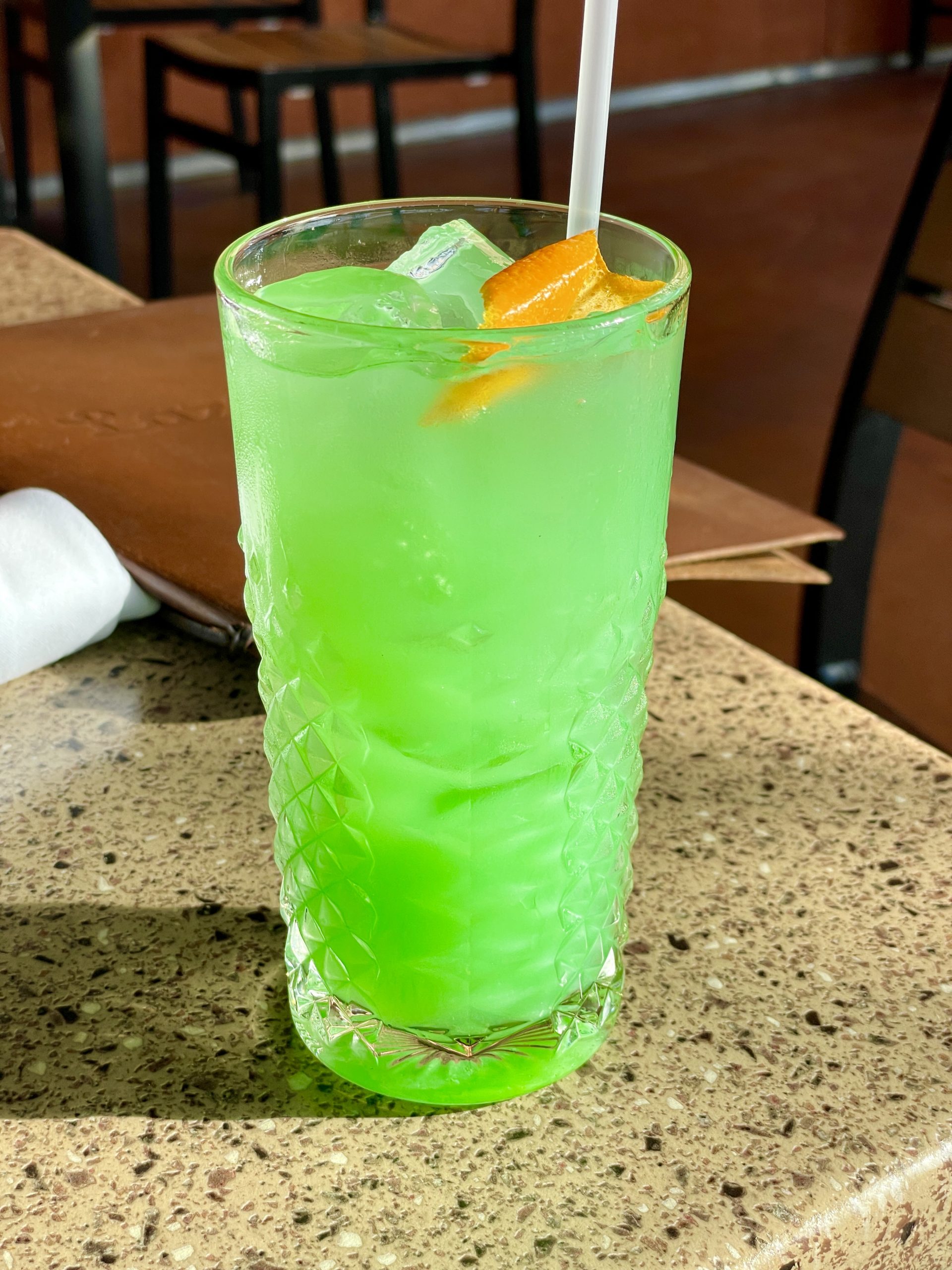
Went out to dinner last night in the Bay Area suburbs. Lazy Dog Restaurant has a “Blue Hawaiian” on the menu that’s pretty close to Harry Yee’s original blue cocktail. Pineapple, Sweet & Sour, Rum, Vodka – and OJ. It came out really green but the taste was just fine.
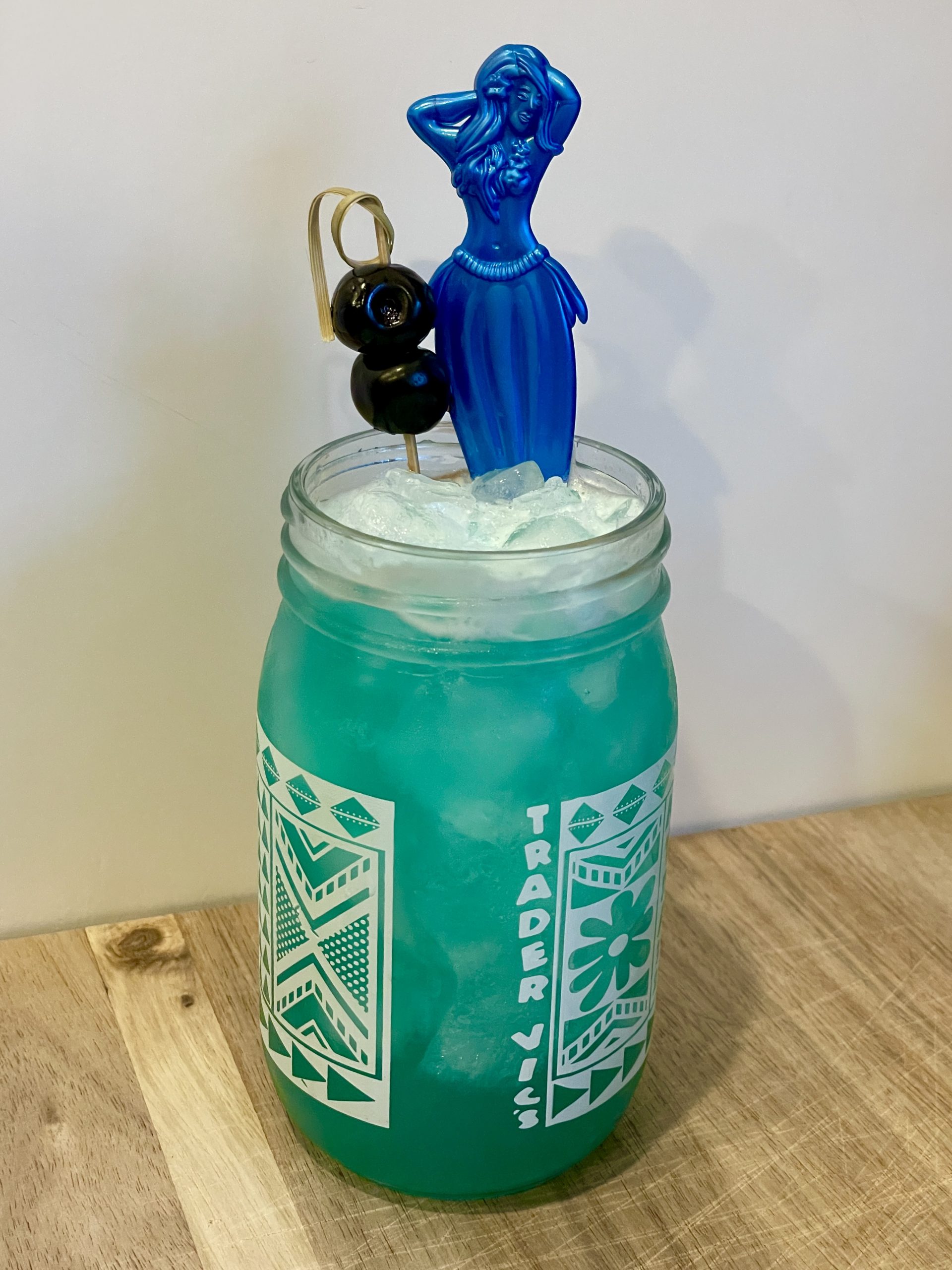
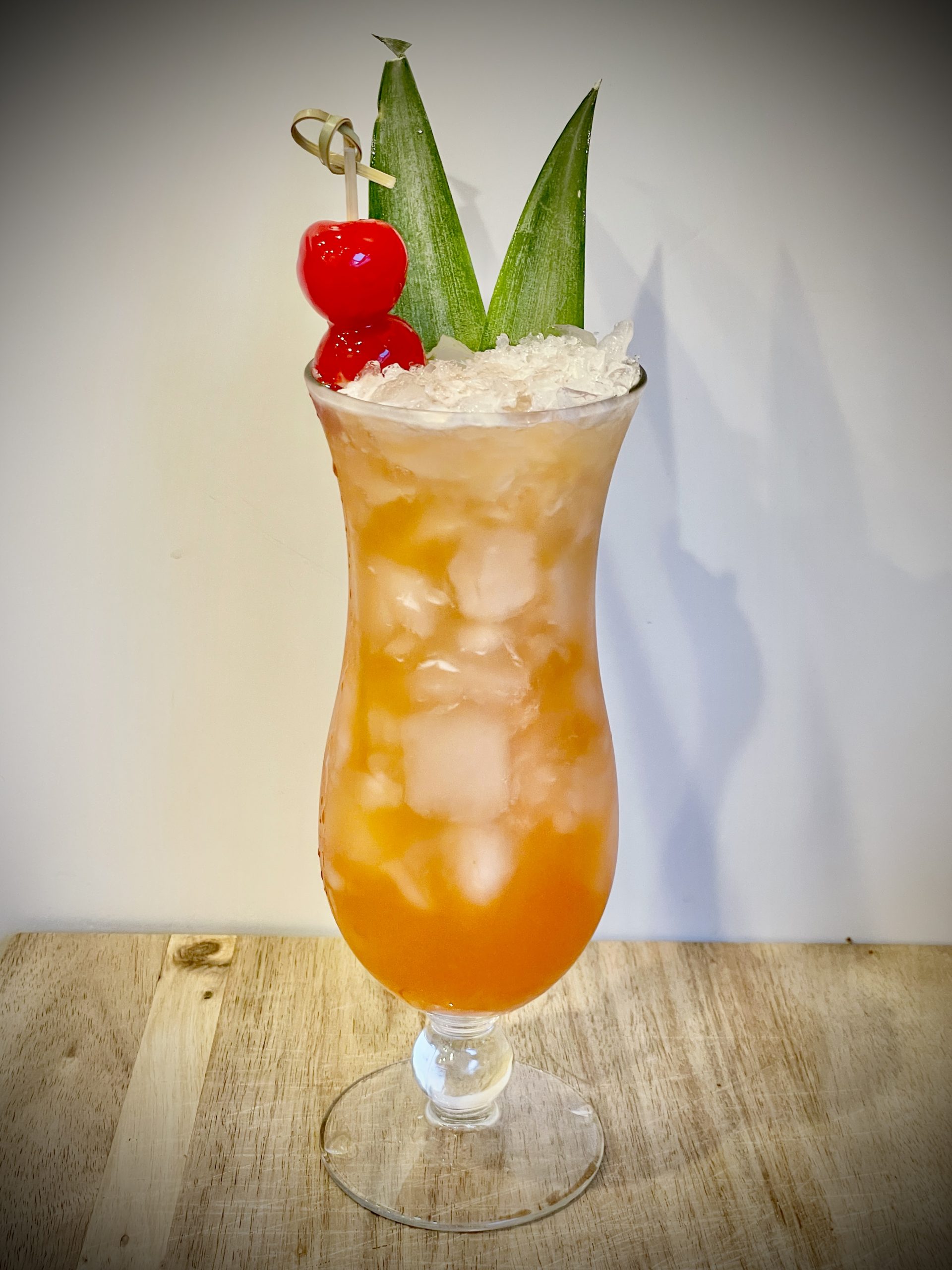
At home I made one with a modified recipe that was even better.
Blue Hawaii (Modified) ½ oz Lemon Juice 2 oz Pineapple Juice ½ oz Simple Syrup ½ oz Blue Curacao 1½ oz White Rum Blend Shake with crushed ice.
My white rum blend is made from almost empty bottles of Denizen 3, Wray & Nephew Overproof, Myers’s White, and Three Rolls Estate. So a bit more flavorful than your standard Puerto Rican White. And way better than Vodka.
I used Giffard Blue Curacao. For this drink, I think adding another half ounce of Blue Curacao for a float would look nicer and add a bit more sweetness to the cocktail.
Note that Harry Lee celebrated his 104th birthday this week. You can read an essay about Yee from Hawaiian journalist Rick Carrol, circa late 1990s, on this website.
The iconic Mai Tai at the Royal Hawaiian Hotel in Waikiki was introduced by Trader Vic Bergeron in 1953. During the 1950s the reputation for this cocktail built such a following that it was described as the “top tourist tantalizer” in 1959. This original Hawaiian Mai Tai was similar to the original, notably switching from long-aged Jamaica rums to a blend of Light Puerto Rican and Dark Jamaican rums – and no added pineapple or orange juice!
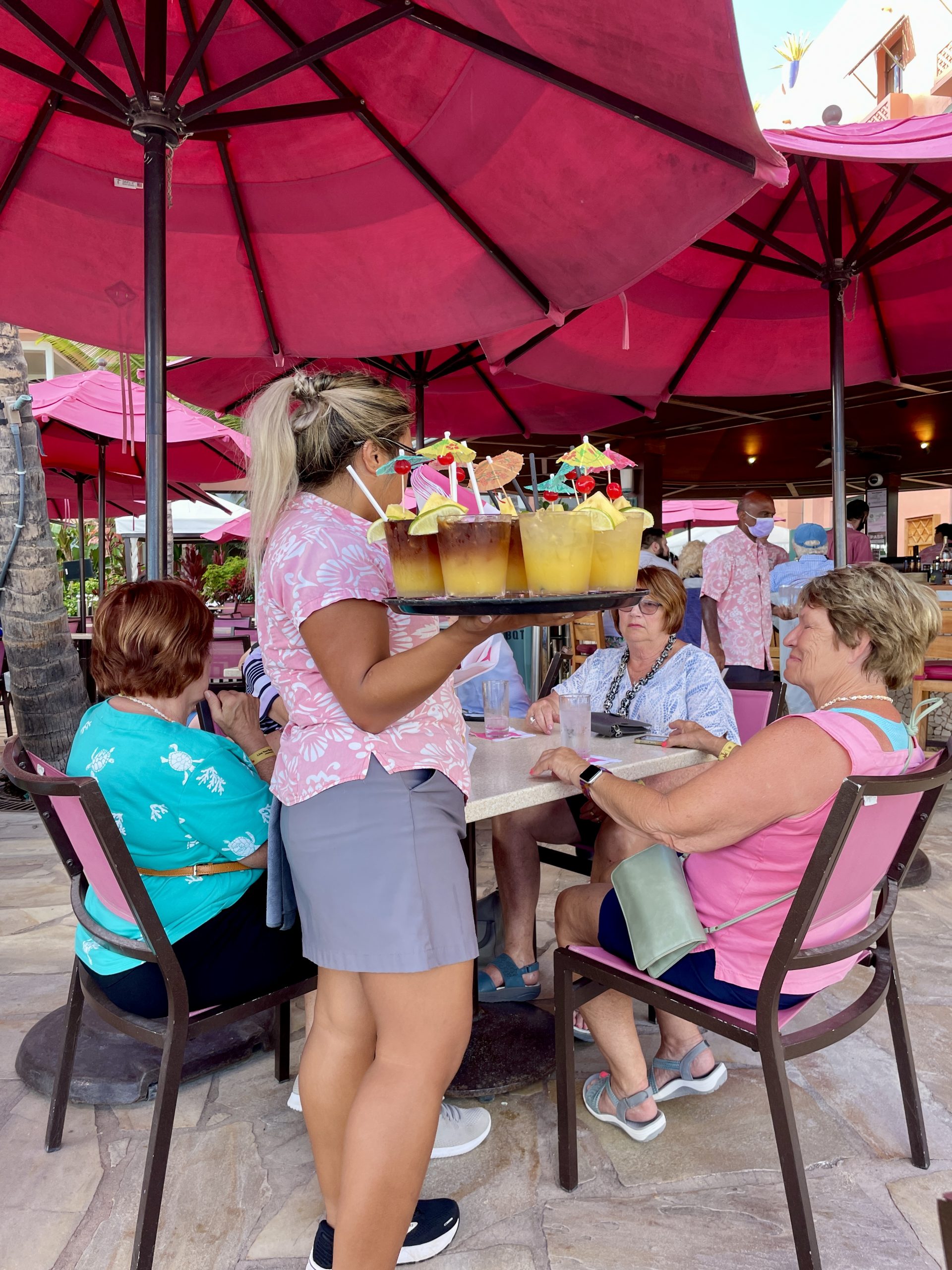
But the Mai Tai you get today at the Royal Hawaiian differs considerably, since it uses the pineapple juice and orange juice commonly seen in modern Island-style Mai Tais.
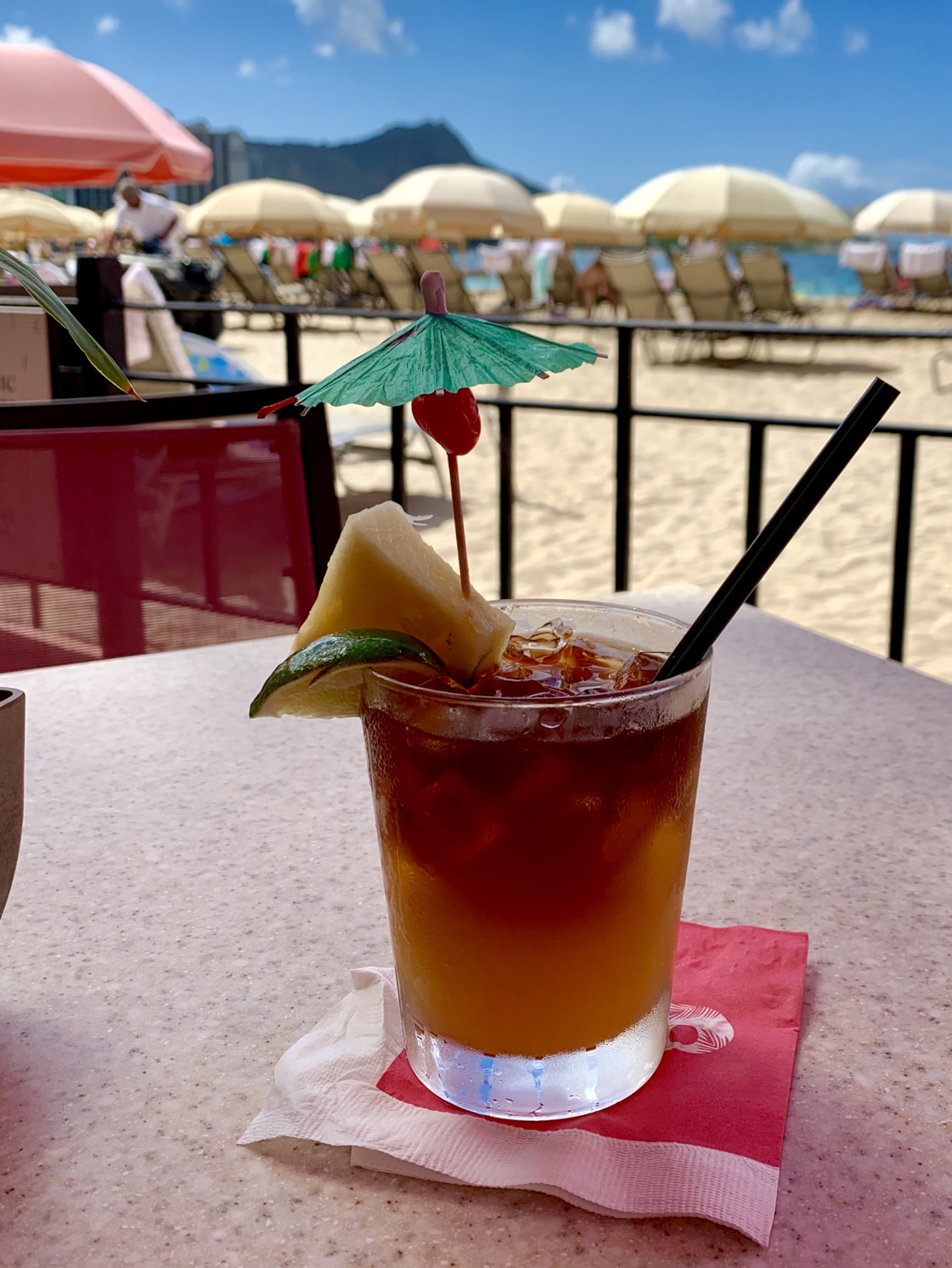
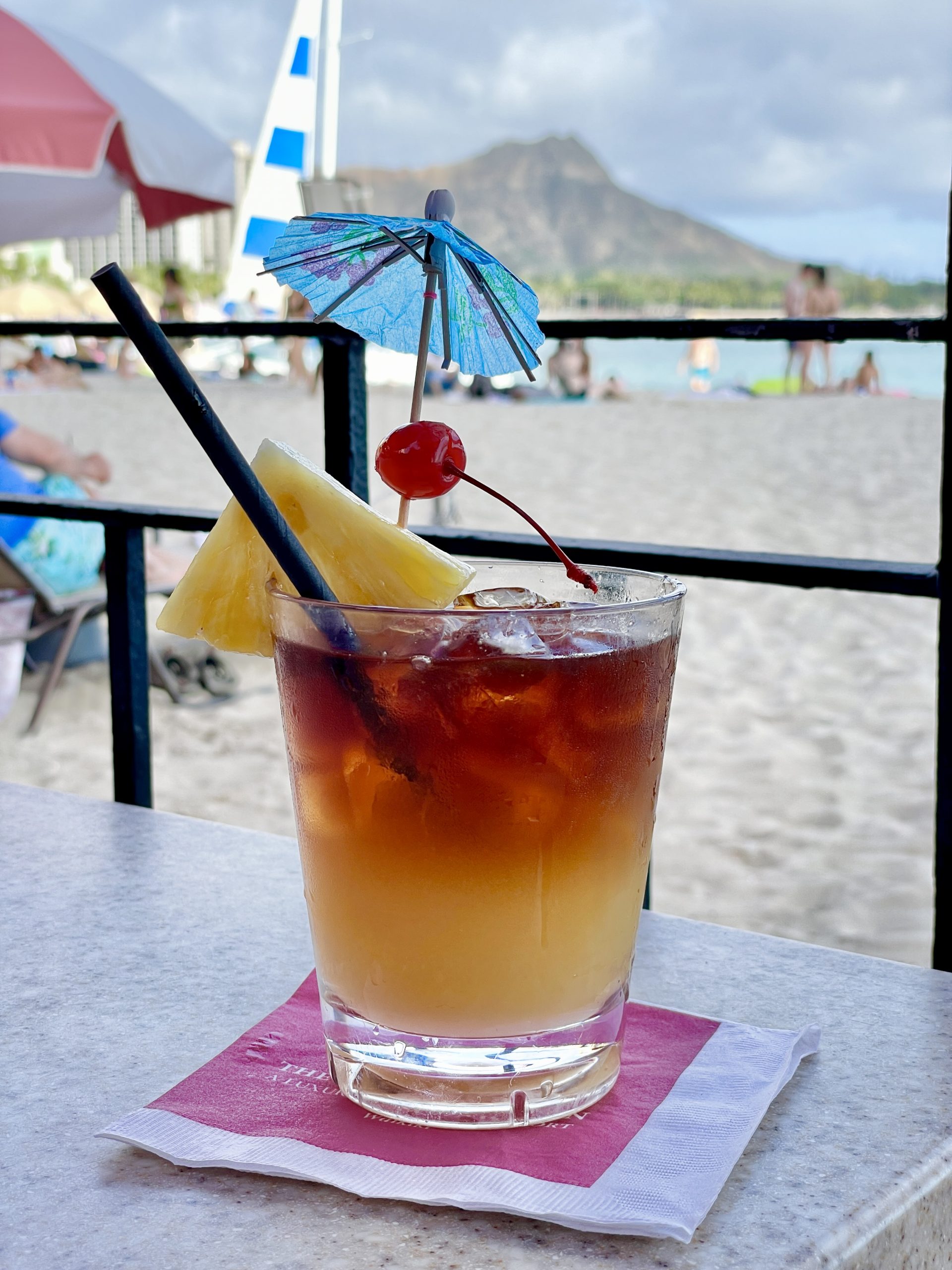
Mai Tais being served at the Royal Hawaiian, June 2022
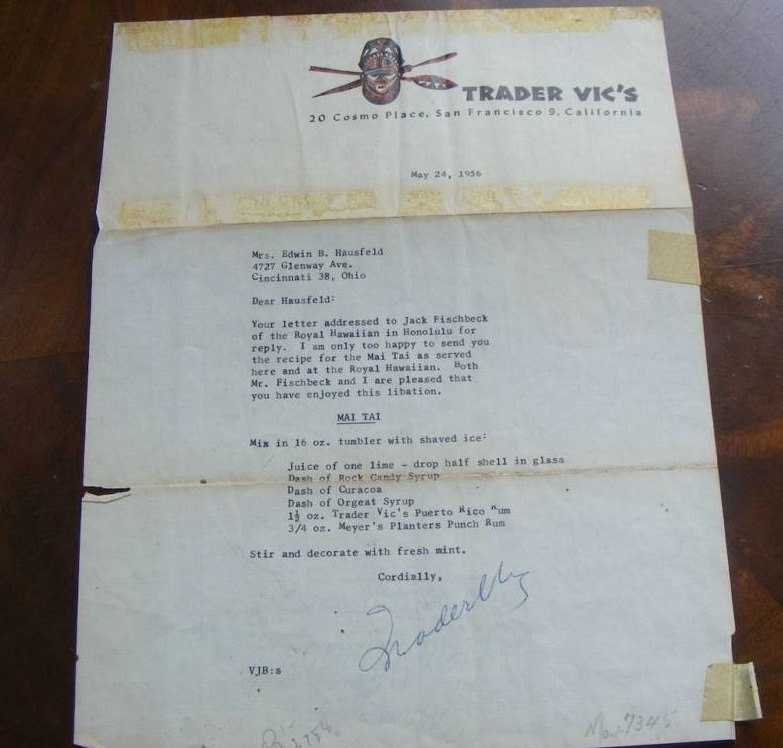
1956 Royal Hawaiian Mai Tai
The earliest known recipe for the Royal Hawaiian Mai Tai comes via a letter written to a customer by Trader Vic himself. This is still substantially similar to the original 1944 recipe, though with different proportion of sweeteners and notably using both a Dark Jamaican rum and also a light rum. It is light and refreshing and a good dark Jamaican rum does punch through in this recipe. Try Worthy Park 109.
1956 Royal Hawaiian Mai Tai Juice of One Lime Dash of Rock Candy Syrup Dash of Curacao Dash of Orgeat 1½ ounces Trader Vic’s Puerto Rican Rum ¾ ounce Myers’s Plantation Punch Rum Stir and decorate with fresh mint
This style of original Hawaiian Mai Tai was commonly seen during the 1960s and beyond. It is noteworthy to note that Trader Vic never added pineapple juice to a Mai Tai.
1972 Royal Hawaiian Mai Tai – Classic Recipe
The use of Pineapple Juice became common in Mai Tais in Hawaii starting in the 1960s, but The Royal Hawaiian seems to be a late convert. There’s a published recipe from their sister hotel The Moana Surfrider in 1968 that’s substantially similar to the 1956 version. However, there must have been pressure to include Pineapple Juice from many tourists.
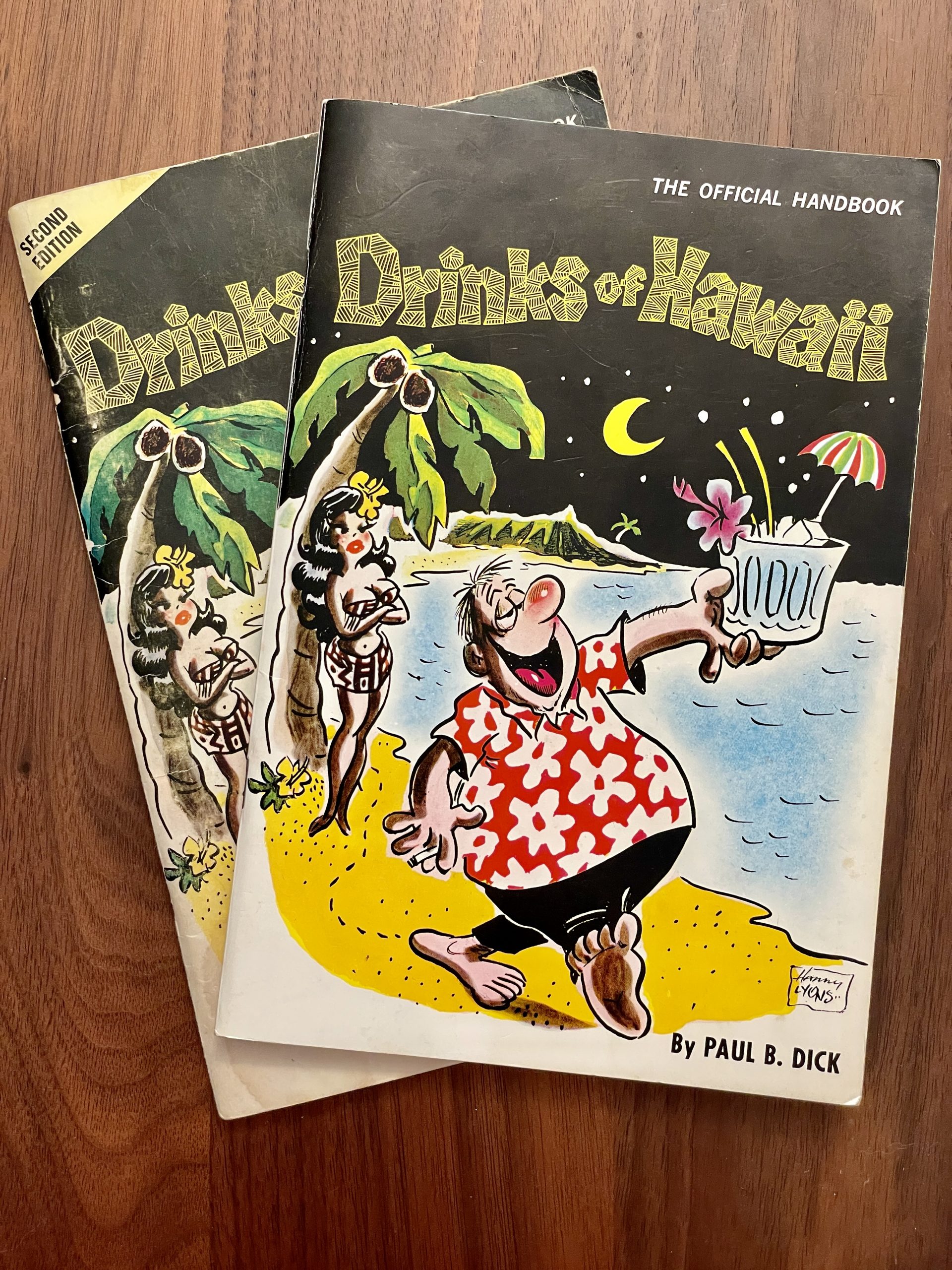
This recipe comes from Drinks of Hawaii, 2nd Ed. 1972, by Paul B. Dick. The entry describes this is “now being used by the Sheraton” implying a recent change. The recipe included in the book did not specify an exact amount of Pineapple or Orange Juice except to say that they should be used in equal parts. The recipe is notable in that it describes using 3 ounces of rum, including two flavorful dark rums. But a rum float is not specified.
This recipe was later used in many books by Jeff “Beachbum” Berry, who designated 1 oz each for the Pineapple and Orange Juice. This seems like the correct choice, keeping the balance with the other ingredients.
1972 Royal Hawaiian Mai Tai ½ oz Lime Juice ¼ oz Lemon Juice 1 oz Orange Juice 1 oz unsweetened Pineapple Juice ¼ oz Sugar Syrup ¼ oz Orgeat ¼ oz Orange Curacao 1 oz Demerara Rum 1 oz Dark Jamaican Rum 1 oz Light Rum
1990s – No Pineapple Juice
This recipe comes from a 1997 Honolulu Star-Bulletin article, and curiously doesn’t include any Pineapple Juice.
1990s Royal Hawaiian Mai Tai 5 oz Mai Tai Mix 1 oz White Rum 1 oz Myers’s Dark Rum Fill glass with ice, add mix and rums
Mai Tai Mix 10 oz Orange Juice 4 oz Orange Curacao 2 oz Orgeat 2 oz Rock Candy Syrup 2 oz Sour Lemon Combine all ingredients and add water to make 1 quart
Mai Tai Mix (single use) 1½ oz Orange Juice ⅔ oz Orange Curacao ⅓ oz Orgeat ⅓ oz Rock Candy Syrup ⅓ oz Sour Lemon Juice 1¾ oz Water
2010s Royal Hawaiian Mai Tai: Headscratcher
This devolved “secret recipe” was published on the Royal Hawaiian’s website, and includes some curious ingredients. The use of almond-flavored Amaretto liqueur in place of Orgeat syrup is sadly not uncommon in Mai Tais. Amaretto is fine elsewhere but doesn’t add the right flavors or body to the cocktail like Orgeat does. The use of Cherry Vanilla Puree, even in a small amount, is also a noteworthy head-scratcher.
2010s Royal Hawaiian Mai Tai Build in shaker with ice: 1 oz Bacardi Rum 1 tsp Cherry Vanilla Puree ½ oz Amaretto di Saronno ½ oz Cointreau 1 oz Fresh Govinda Orange Juice 2 oz Fresh Govinda Pineapple Juice ½ oz Whaler’s Dark Rum Float
Royal Hawaiian Mai Tai, 2019
2022 Royal Hawaiian Mai Tai Returns to Normalcy
In mid-2022, the Royal Hawaiian updated their website to include this updated “secret recipe” and thankfully it’s much more of a standard Island Mai Tai. It is nice to see Orgeat coming back, though I don’t find Old Lahaina rum to be particularly good. Nonetheless, I did very much enjoy the cocktail in June 2022 when I sat looking out at Diamond Head.
2022 Royal Hawaiian Mai Tai 2 oz Pineapple Juice 1 oz Orange Juice ½ oz Orgeat ½ oz Orange Curacao 1 oz Old Lahaina Light Rum 1 oz Old Lahaina Dark Rum (float) Shake all ingredients except the Dark Rum with ice. Pour in a large “bucket” glass. Float the Dark Rum, garnish with a parasol with cherry, pineapple and lime wedge.
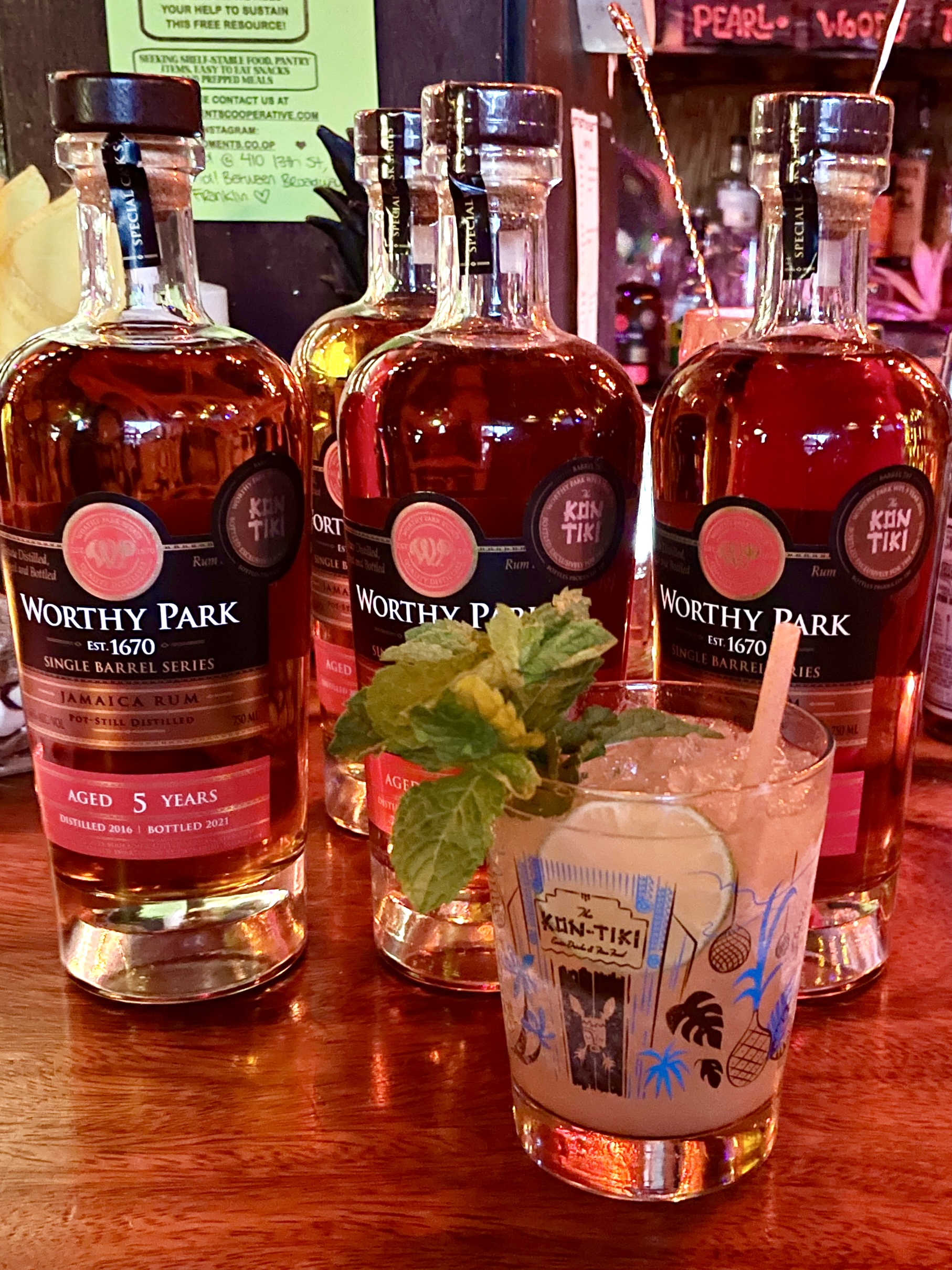
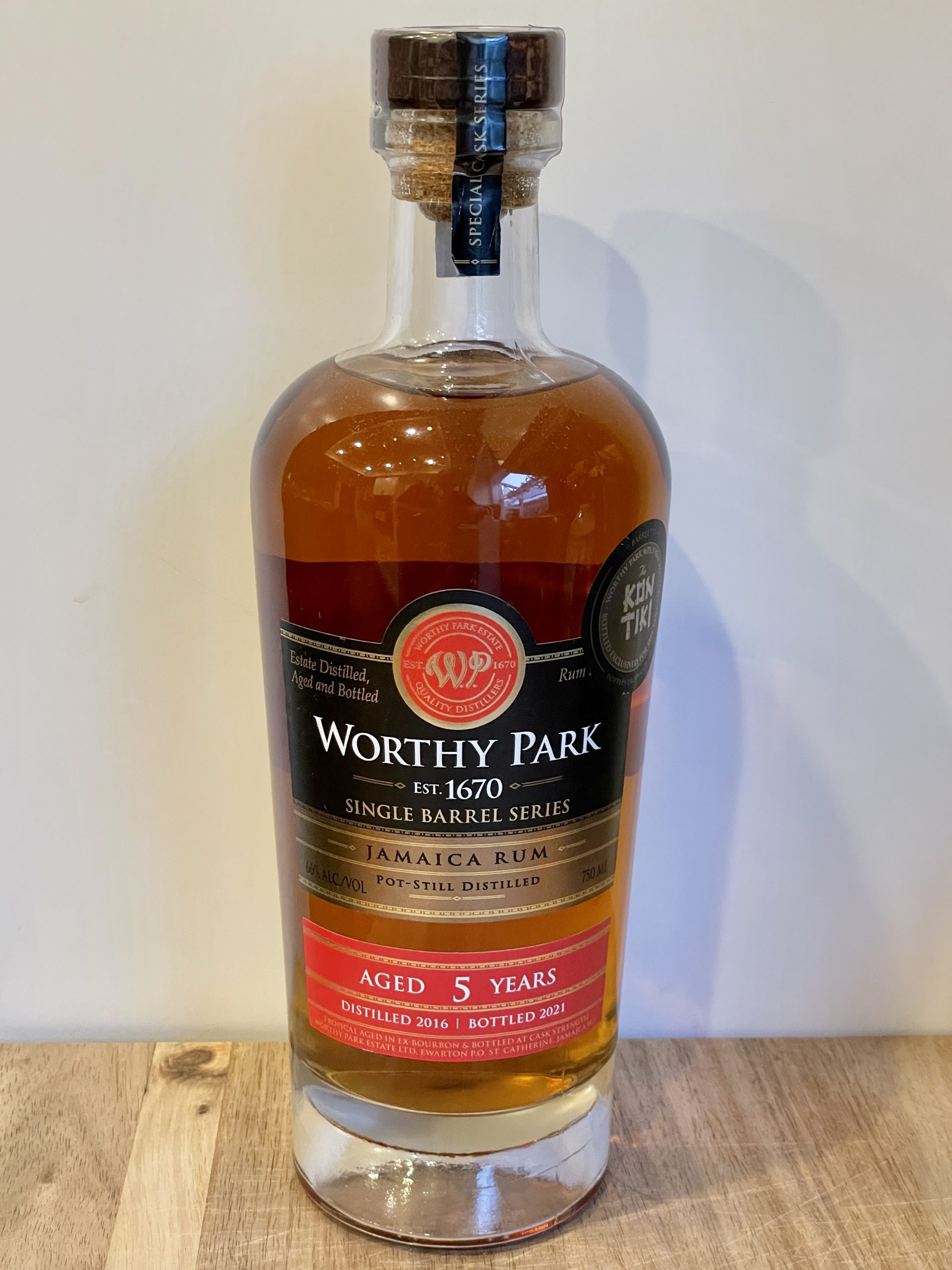
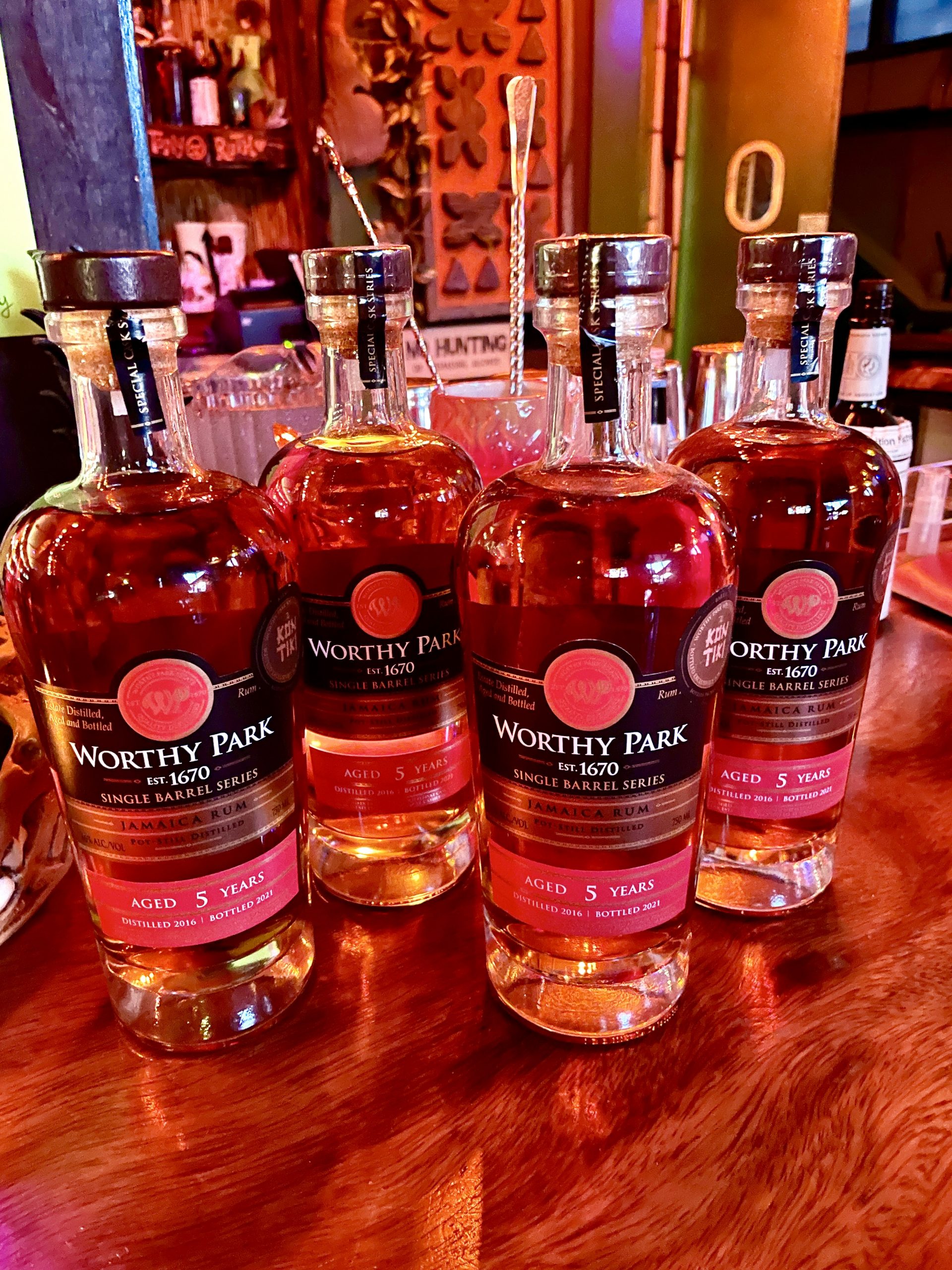
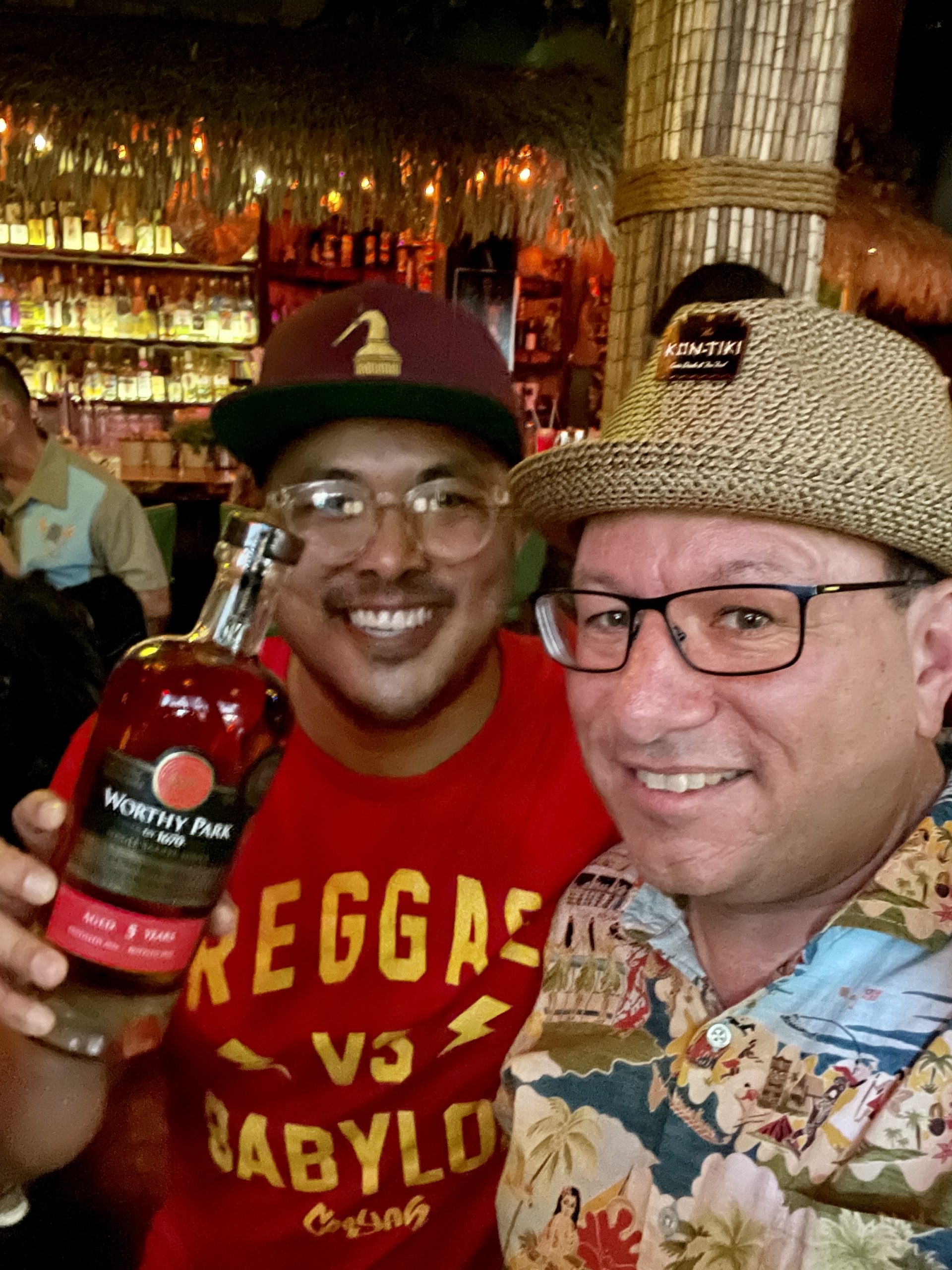
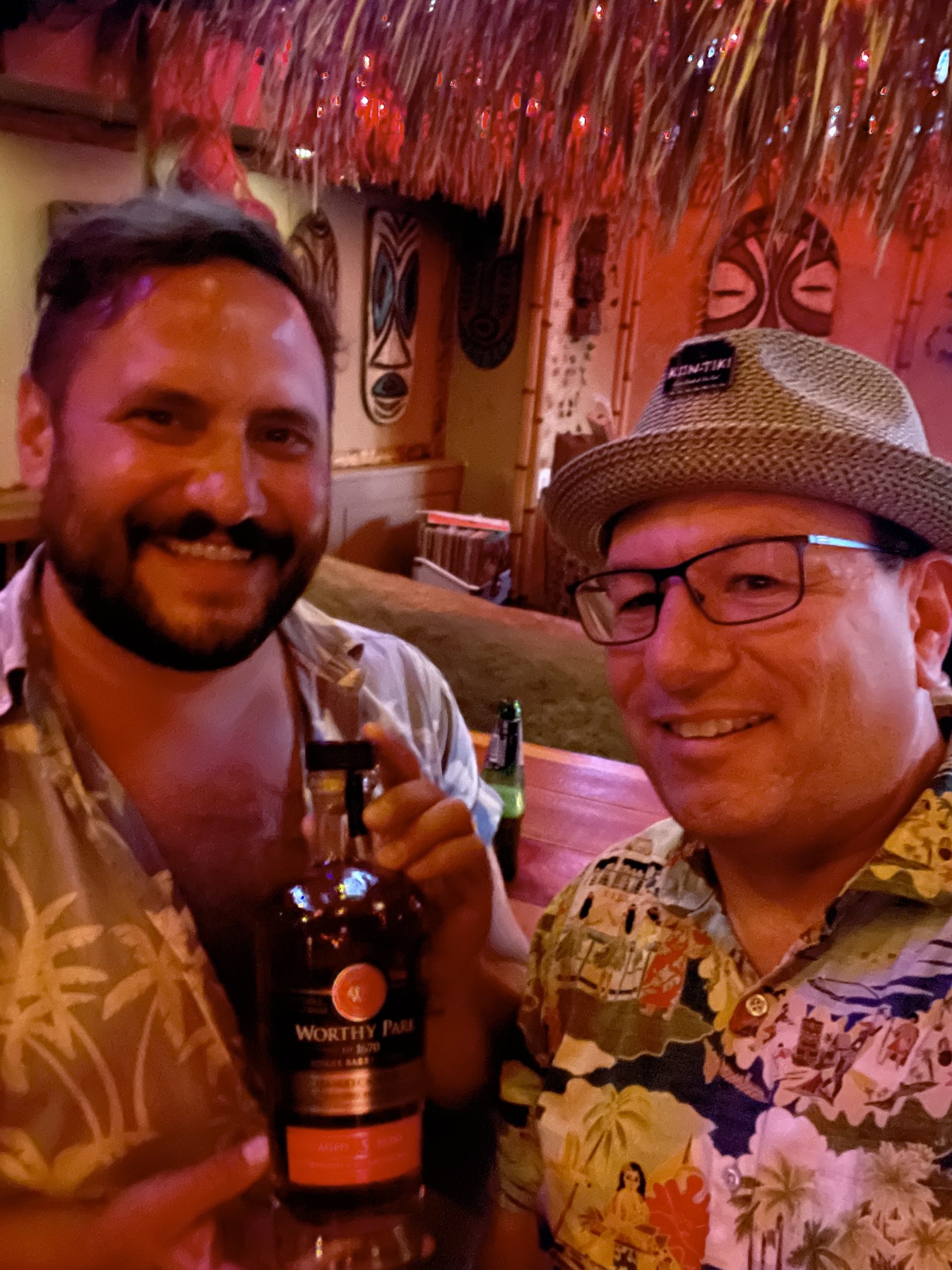
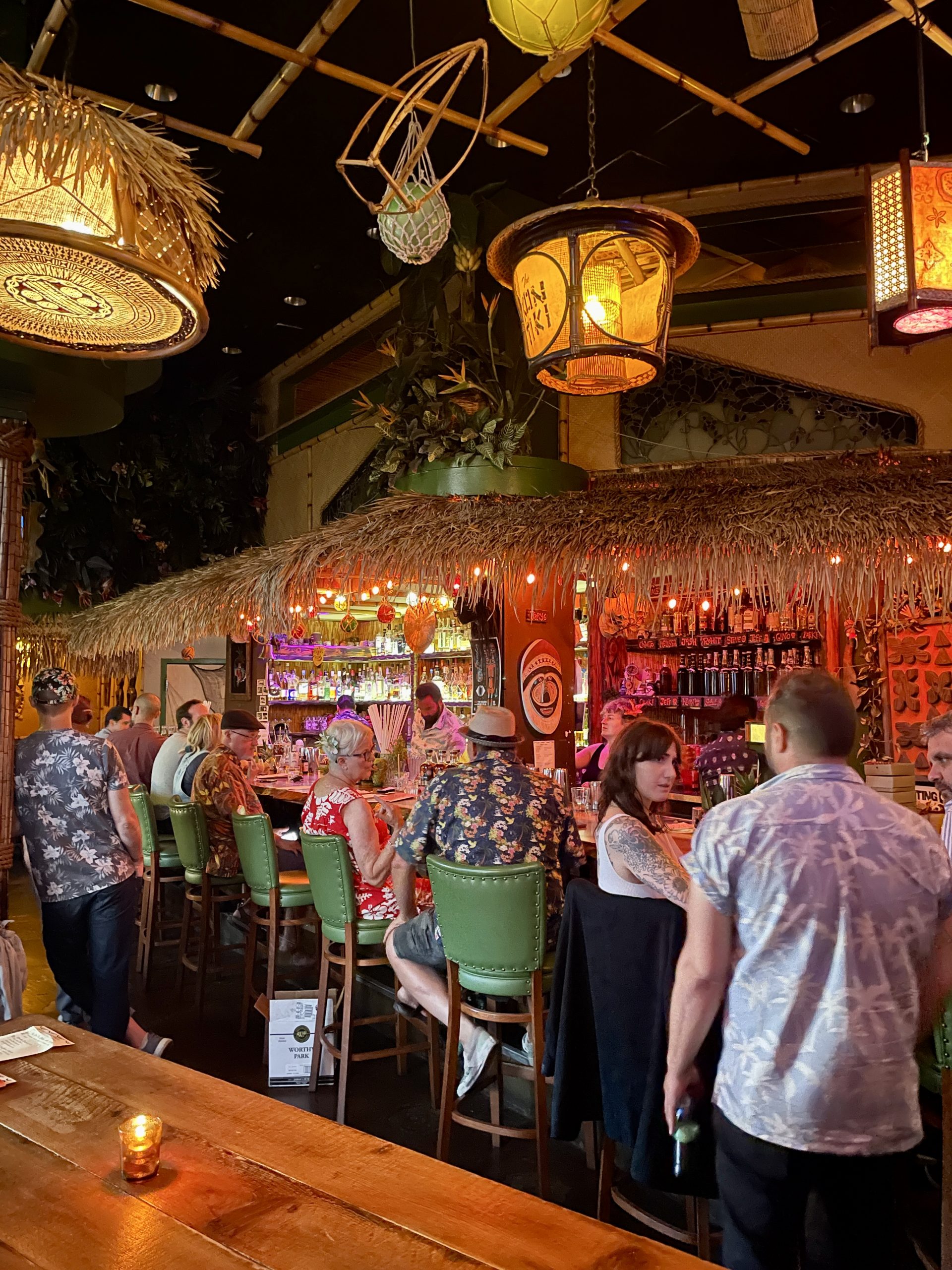
Congrats to our friends at The Kon-Tiki who celebrated Monday evening with the long-awaited release of their Worthy Park Single Barrel Rum. This cask-strength rum from Jamaica comes in at a hefty 66% ABV and you’ll taste every bit of the flavor. Obviously overproof and quite funky by general rum standards, but not so much that this can’t be sipped neat or on the rocks. It’s from barrel 717 and aged five years in the tropics.
These bottles are for sale. Prices vary depending on whether you buy one, two, or a case, but think ~$60 per bottle. It is a great rum and supplies are limited, so be sure to visit The Kon-Tiki soon to secure this great rum.
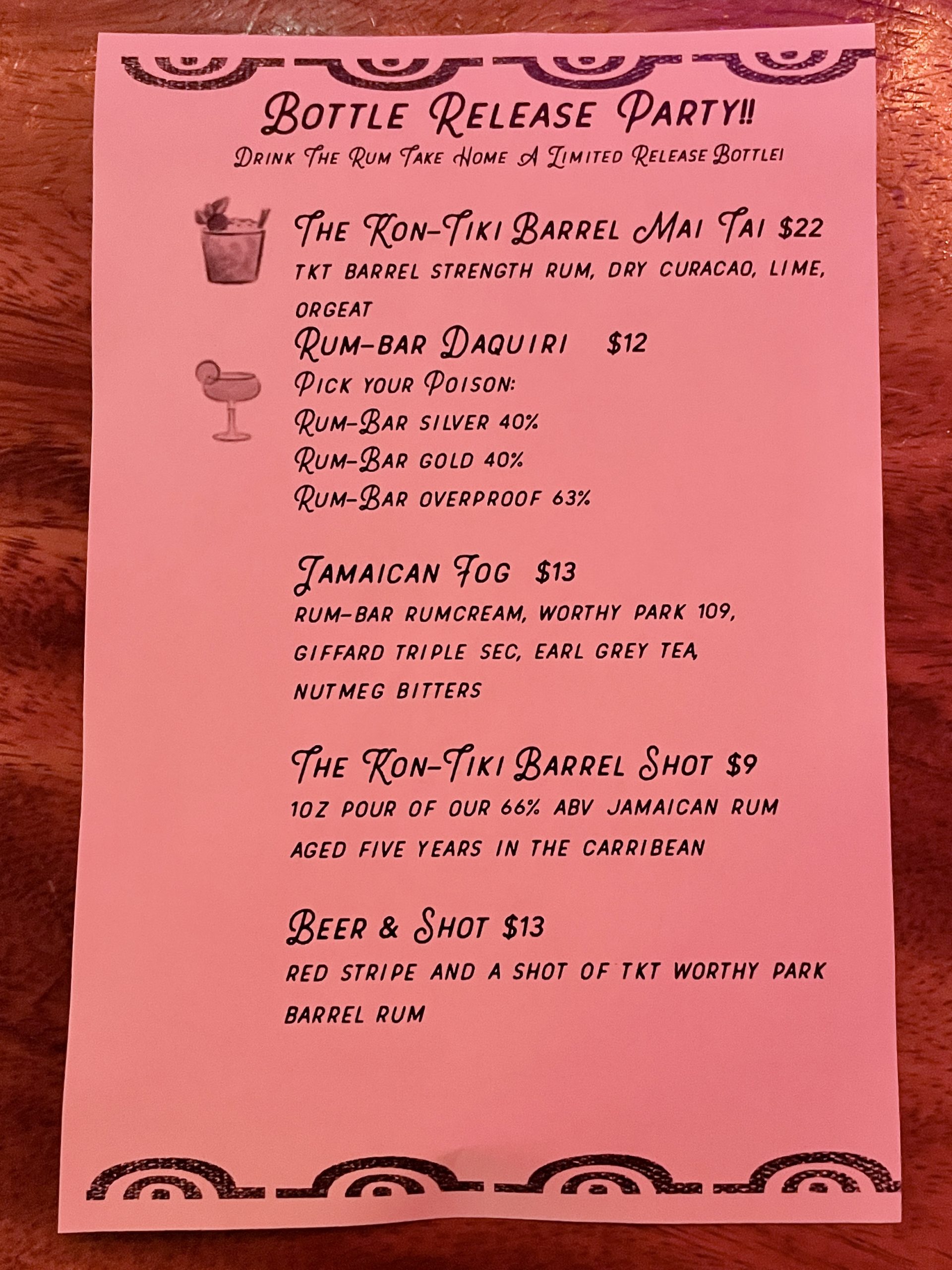
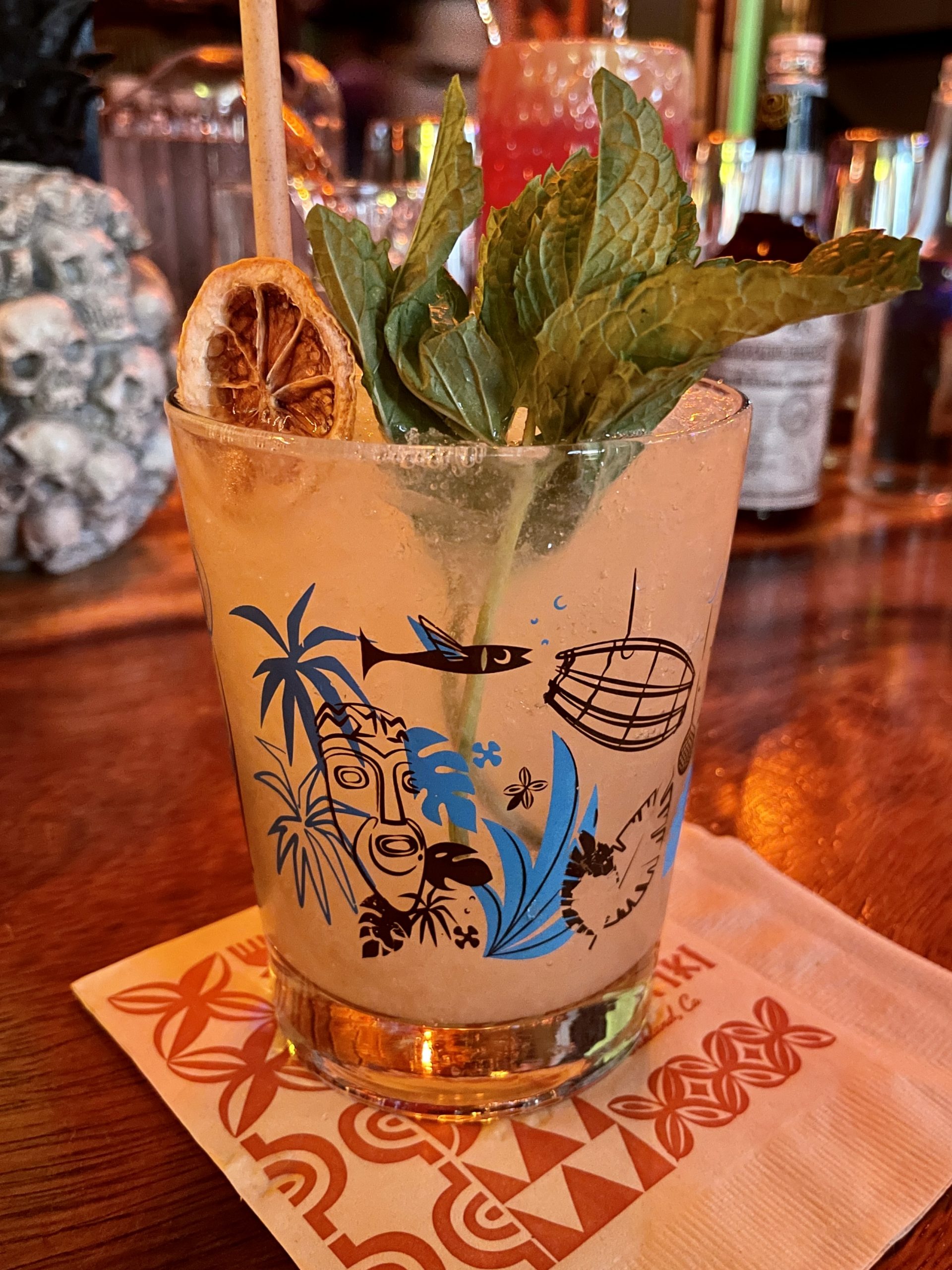
For the party on Monday, there were some cocktail specials featuring this rum along with other products from the Worthy Park / Rum-Bar Rum portfolio. Of course I had to try the Kon-Tiki Barrel Mai Tai and this rum is simply a great choice. One of my favorite Mai Tais of 2022. Expect to see this as a higher-end Mai Tai option in a revised menu coming soon.
Got to speak a little with Zan Kong who is the Commercial Manager for Spirits at Worthy Park. Such a nice guy and knowledgable and passionate about what Worthy Park is doing.
For many years the distillery has made a tidy profit selling bulk rum to the likes of Hamilton Rums, Doctor Bird, and others. But lately the distillery seems to be using more of their rum for their own products. I’m a fan of their mainstream aged rum release Worthy Park Single Estate Reserve, but also their unaged Rum-Bar Overproof expression and Worthy Park 109, a lightly aged dark rum. 100% pot still rum, always.
Kon-Tiki Barrel Mai TaiZan Kong from Worthy ParkKon-Tiki Owner Christ Aivaliotis
When Trader Vic Bergeron included the Mai Tai on his cocktail menu for the Royal Hawaiian Hotel and Moana Hotel in 1953, he never knew the cocktail would become one of the most famous in the world. The cocktail’s exotic name surely helped get the drink ordered, but the taste is what made the tourists rave.
This style of Mai Tai was similar to the original 1944 recipe, but was adjusted to omit the long-aged rums that had been the featured spirit in the cocktail up to that point. The use of light rum in combination with a flavorful dark rum was common across all published recipes of this era, including in the recipe that Bergeron provided to a guest in a letter in 1956. This affords a lighter style to the cocktail, likely considered more refreshing and approachable for the average hotel guest.
The dark Jamaican rum of this era was not as ester-forward as what you might find today, and funky rums wouldn’t have been a good choice for tourists. So, think of something like Coruba or Myers’s rather than Smith & Cross. The commonly seen Demerara rums you find today would be a fine substitution. Rum floats were not common during this time-period, but more than two ounces of rum was often seen. So wonder the tourists loved those “tummy warmers.”
Though the recipes of this era vary, there are some common elements. Besides the use of both light and dark rum, the sweeteners were included in equal parts. Before pineapple and orange juice were added to the Hawaiian Mai Tai in the 1960s, we did see that citrus juice was used in healthy amounts. Lime was common, sometimes used in combination with lemon juice.
Looking at the recipes and how they varied, we taste tested some variants and came up with a generic version that is both representative and also easy to prepare. Not too boozy, not too tart. Just right.
1950s-Era Hawaiian Mai Tai (Generic) 1 oz Lime Juice ⅓ oz Orgeat ⅓ oz Rock Candy Syrup ⅓ oz Orange Curacao 1½ oz Light Rum 1½ oz Dark Jamaican Rum or Demerara Rum
Shake with crushed ice and pour into a double-rocks glass, topping with more crushed ice. Garnish with mint or orchid, and either a pineapple spear or a speared pineapple chunk with a cherry.
Leading up to Mai Tai Day (August 30), we are sharing five Mai Tai myths.
While there was a great deal of secrecy around cocktail recipes at Don the Beachcomber locations, there was a different practice with Trader Vic’s. While the original 1944 Mai Tai recipe wasn’t published until the 1972 Bartenders Guide Revised, it also wasn’t a trade secret known only to Trader Vic. He had already published many of his Trader Vic’s recipes in the 1947 Bartender’s Guide.
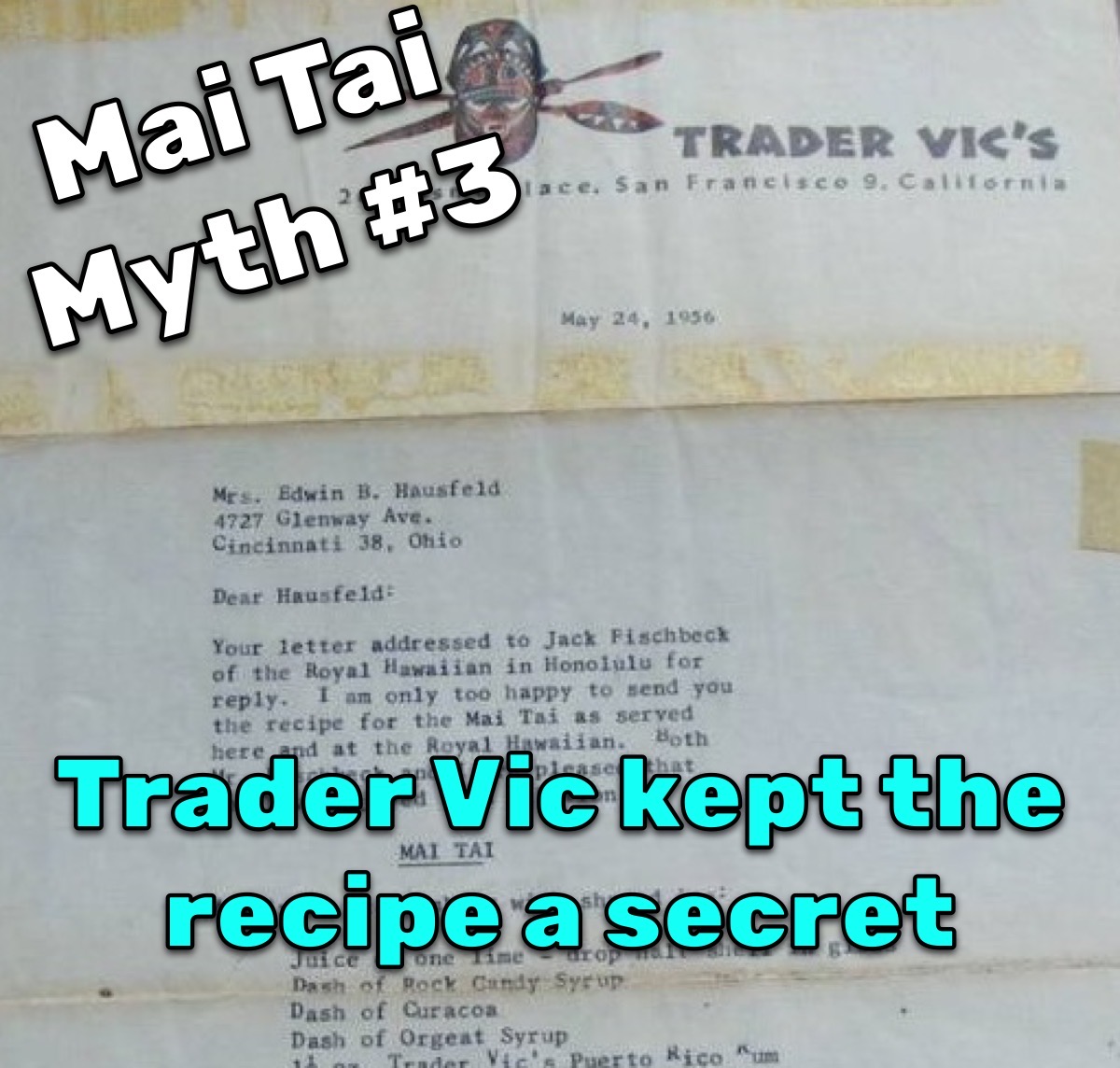
A customer wrote to Bergeron in 1956 requesting the recipe for the Royal Hawaiian Mai Tai and Trader Vic himself signed the letter sent back to the customer. We know because letter went up for auction in 2010. This remains the earliest documented Hawaiian Mai Tai recipe and is similar to the original 1944 Mai Tai.
This recipe and others like it were published in newspaper articles and books, but Trader Vic’s didn’t sue or publicly complain about the recipes being shared. It was only when the Sun-Vac corp tried to copyright the Mai Tai for their commercial Mai Tai mix that lawyers got involved. Vic won the out of court settlement.
Want to learn more? Check our essay The (De)Evolution of the Hawaiian Mai Tai, or view the article in Issue 15 of Exotica Modernemagazine. Or join us at Trader Vic’s Mai Tai Day event on August 28 for a special seminar on the Hawaiian Mai Tai.
Leading up to Mai Tai Day (August 30), we are sharing five Mai Tai myths.
Trader Vic Bergeron issued a press release in 1970 describing how he original developed the Mai Tai and he also included the original recipe. During this time period and continuing to present day, Mai Tais are made with non-original ingredients such as grenadine, orange juice, and pineapple juice, so we’ve seen speculation that this means that body knew what was actually in a Mai Tai. The most frequent rationale goes something like “nobody knew what was in a Mai Tai, so they made due with what they had.”
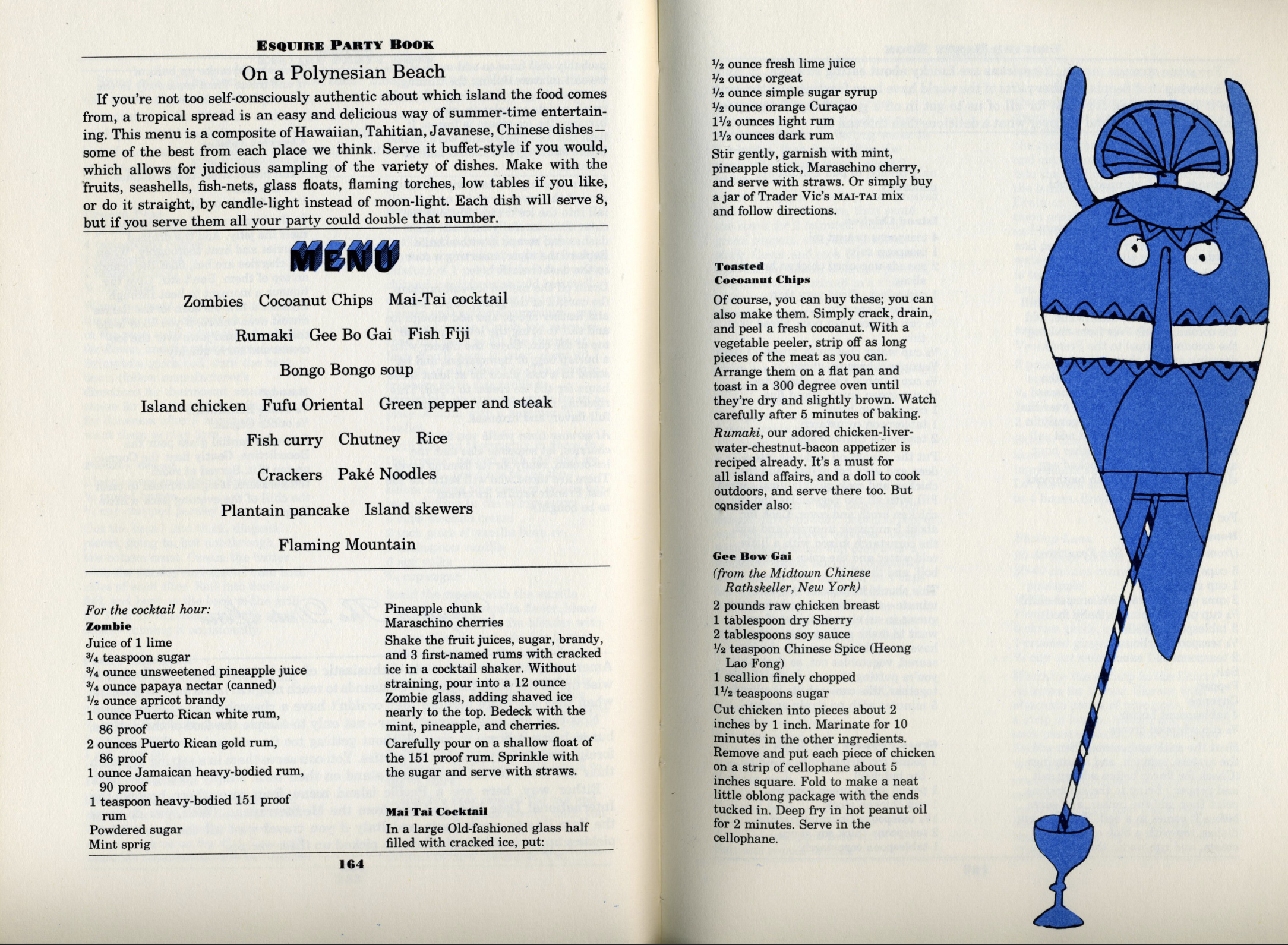
Nonetheless, there are numerous 1950s-1960s published recipes in newspapers and books such as the popular Esquire Party Book (1965) that provided Mai Tai recipes featuring the original ingredients: lime, rock candy syrup, orgeat, orange curaçao, and rum. This isn’t like the Zombie where nobody knew about Don’s Mix or even what was in it.
The proportions of those published recipes differed from the original 1944 recipe, in large part due to Trader Vic’s own tweak of the recipe that he provided to the Royal Hawaiian Hotel in 1953. We’ll have more about that recipe in our next post. But the constant use of the obscure orgeat in these recipes is reason enough to blow the myth that nobody knew the ingredients of a Mai Tai.
Want to learn more? Check our essay The (De)Evolution of the Hawaiian Mai Tai, or view the article in Issue 15 of Exotica Moderne magazine. Or join us at Trader Vic’s Mai Tai Day event on August 28 for a special seminar on the Hawaiian Mai Tai.