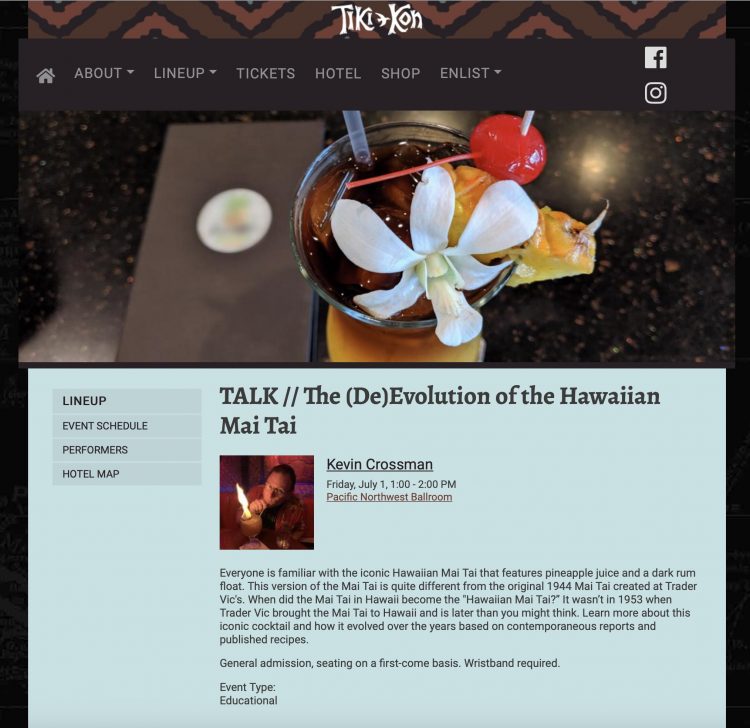
As if you need any more excuses to attend Tiki Kon this year, you can come attend my seminar on the De-Evolution of the Hawaiian Mai Tai. This session is based on the same research I did for the forthcoming article for next month’s issue of Exotica Moderne magazine and will include additional detail, content, media, and stories.
The session explodes a few myths about this iconic drink, as well as the timeline for when the cocktail changed at the iconic Royal Hawaiian Hotel.
Tiki Kon: Rim of Fire is in Portland from July 1-3. Learn more at www.tikikon.com.
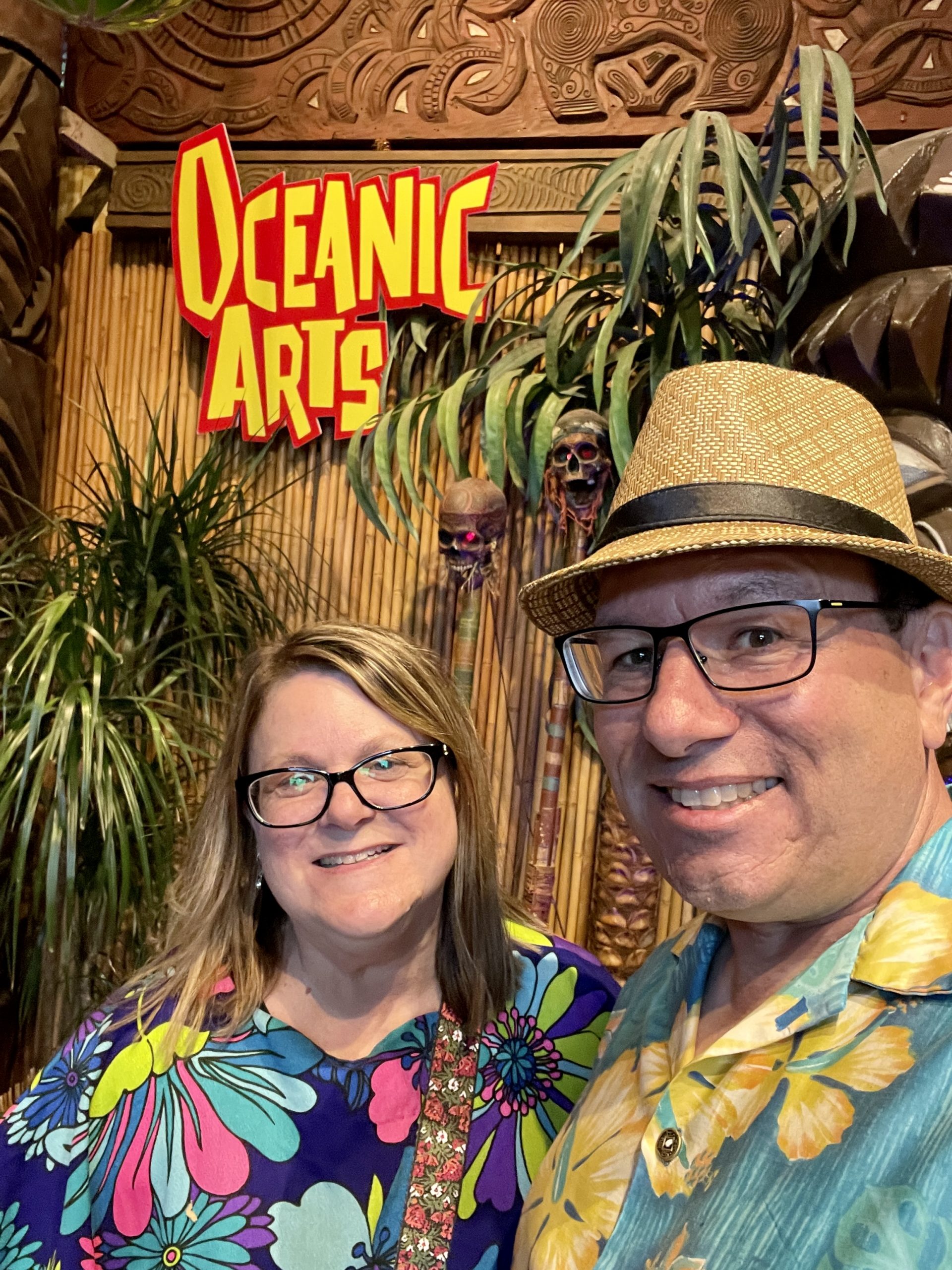
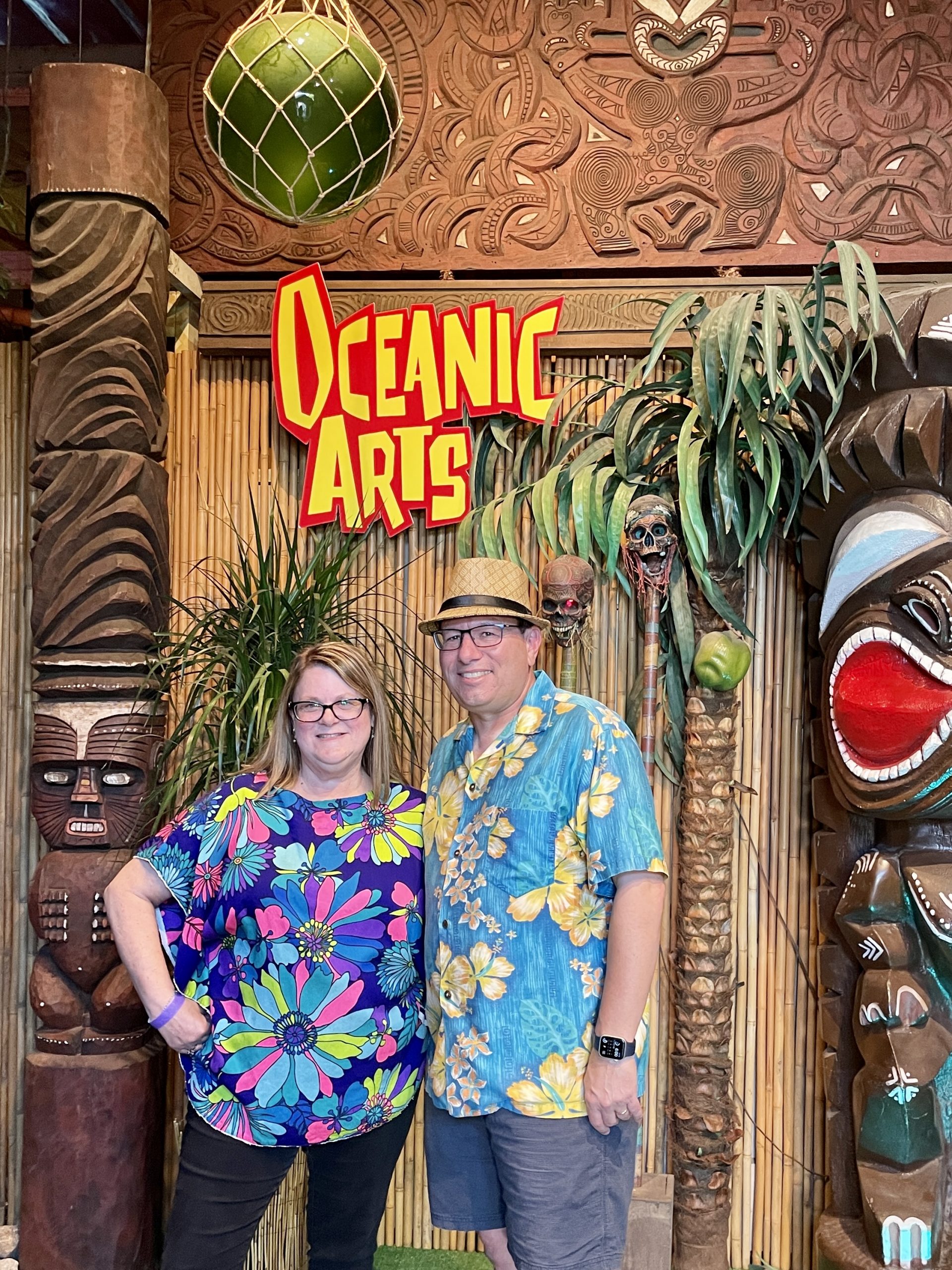
Such a great event at Oceanic Arts in Whittier, CA, which hosted the second of five special events to celebrate the legacy of the decor supplier to so many tiki bars and Polynesian restaurants.
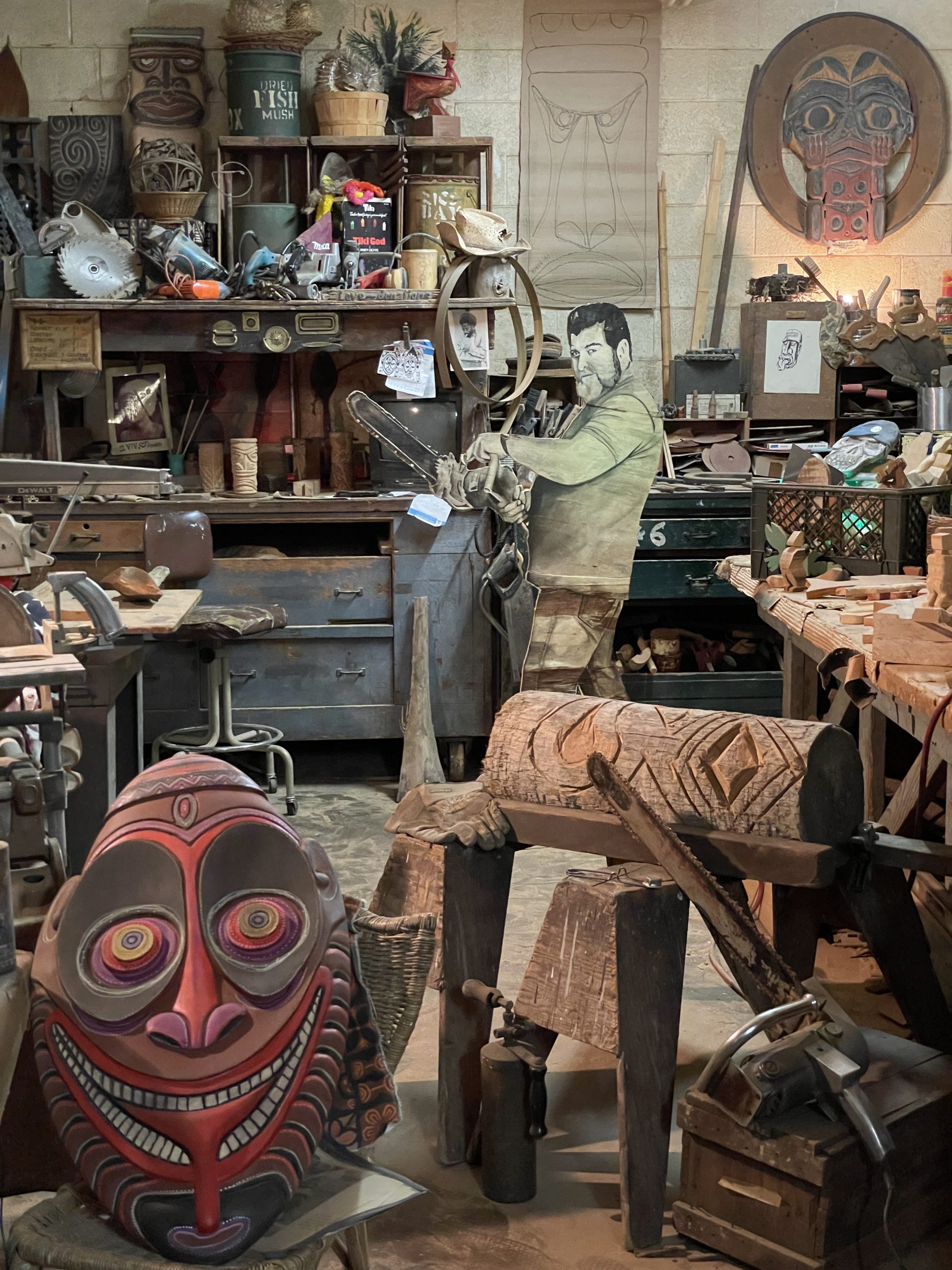
The Oceanic Arts warehouse has been transformed into an event space with two stages, several bars, space for food vendors, and still has space to show off many of the items from the collection. An auction later this month will clear the space and owners Bob Van Oosting and LeRoy Schmaltz will retire after running OA since 1956.
This event featured a slideshow from Sven Kirsten documenting the tiki revival from the late 1980s to early 2000s. Though not focusing on OA specifically, Sven worked through several notable mentions of items that originated from there. There were also talks about creating your own home bar as well as one on home cocktails.
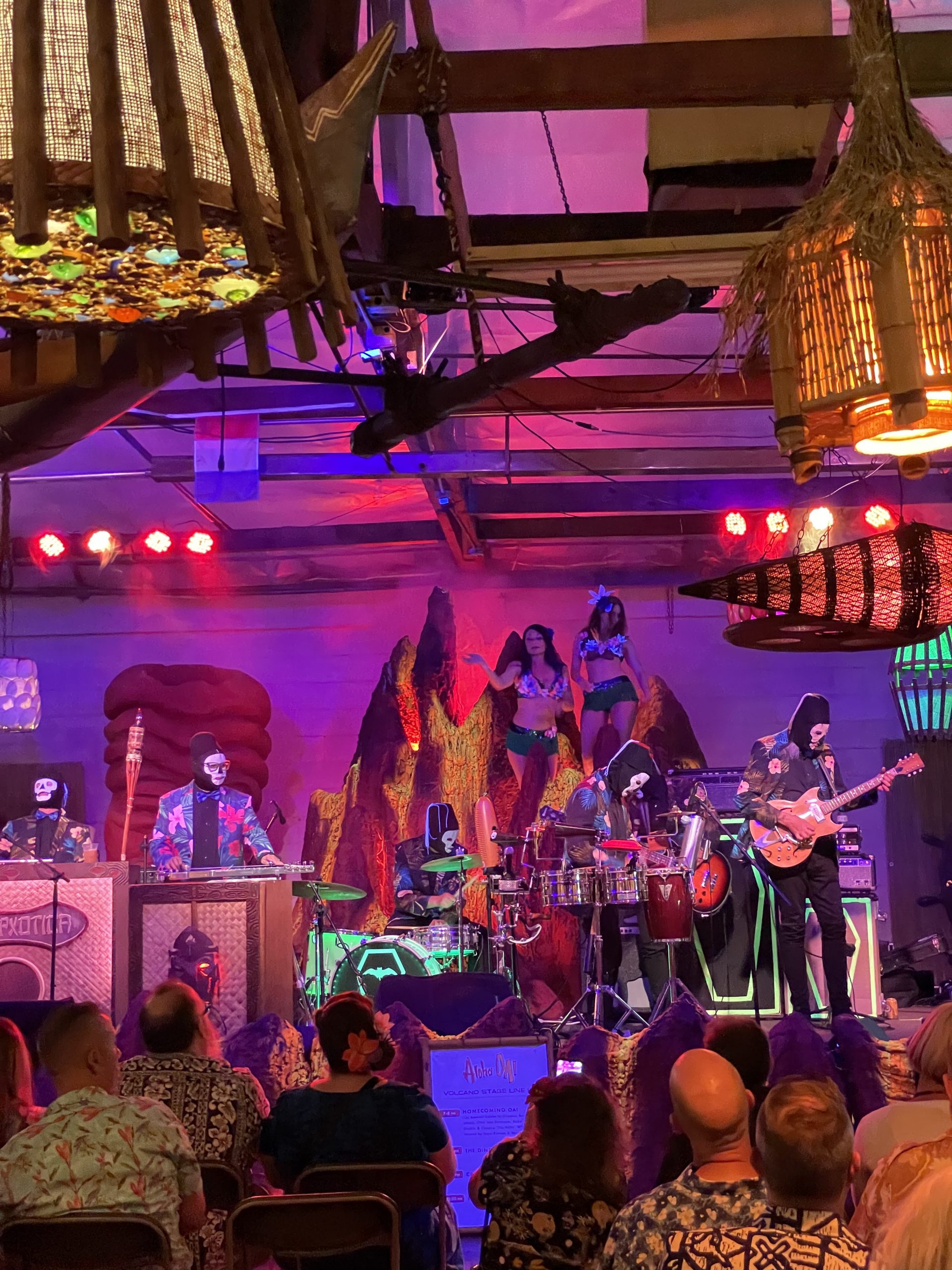
Several great musical acts played the event. We were welcomed by Jill Martini and the Shrunken Heads as we entered the event, and later saw the Ding Don Devils, Creepxotica, and The Hula Girls play. The volcano stage build inside was elaborate and was smoking all night as if it might actually erupt.
Creepxotica
We’d heard the first night had some issues with the cocktails, but thankfully all those kinks were worked out for us. There were two main bar stations, hosted by Long Beach bars Bamboo Club and Secret Island Tiki Restaurant and Music Longe. We especially liked the Dr. Bamboo from Bamboo Club. There were a few food booths including a place doing Chicken and Tofu Satay that Mrs. Mai Tai and I both loved.
We saw so many old and new friends in attendance. I spoke with many who had always meant to visit Oceanic Arts but never made the time. We were sadly in that club too. So, while we celebrate the legacy of Oceanic Arts we must remind ourselves to make doing these visits a priority. You never know when they’ll be gone.
Thanks to Peekabo Gallery for putting on such a great event.
Mrs. Mai Tai, everyoneLeRoy’s WorkshopSven Kirsten’s presentation
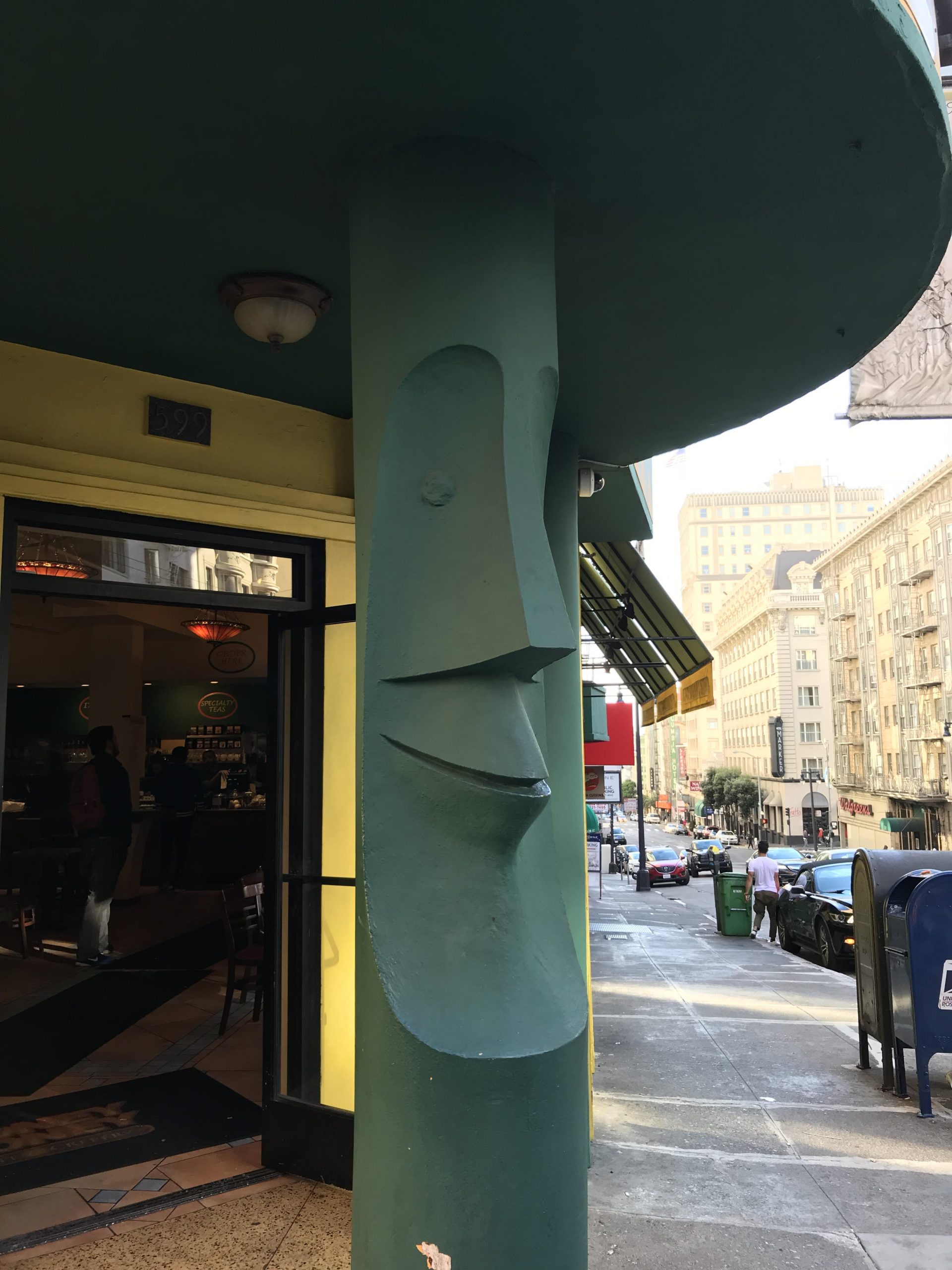
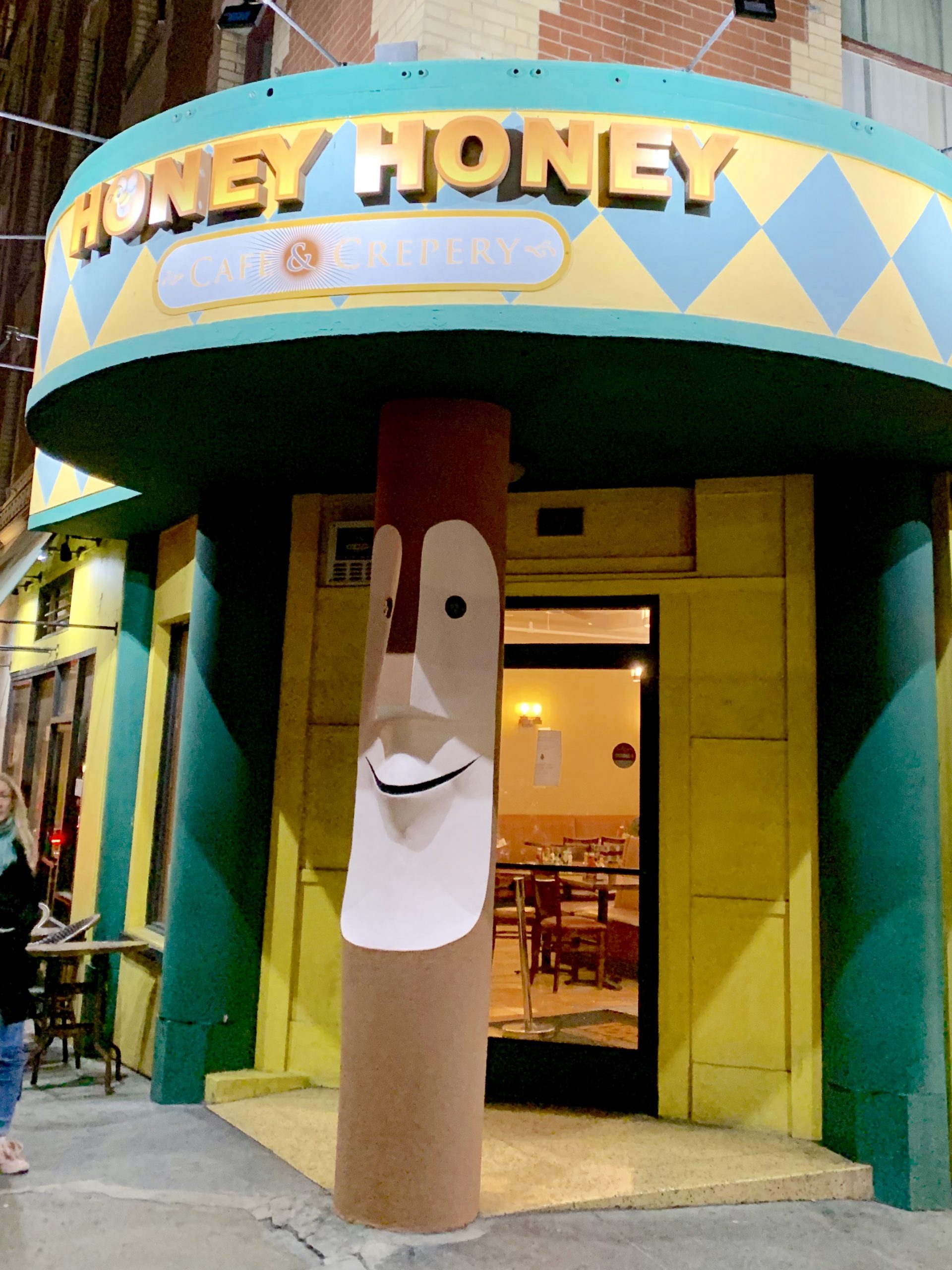
The original Tiki Bob’s location in San Francisco has been closed for decades, but the iconic face of Tiki Bob is still present at the corner of Post and Taylor. Today, this is the Honey Honey cafe that serves sandwiches and crepes.
For many years, Bob was painted green to match the Honey Honey motif. But a few years ago local tikiphiles Heather M. David, muralist Donald Harvey, and Smuggler’s Cove owner Martin Cate received permission to restore Bob to his vintage glory and this is the look that remains in place today. Read more about the transformation and be sure to visit Bob when you’re in the City.
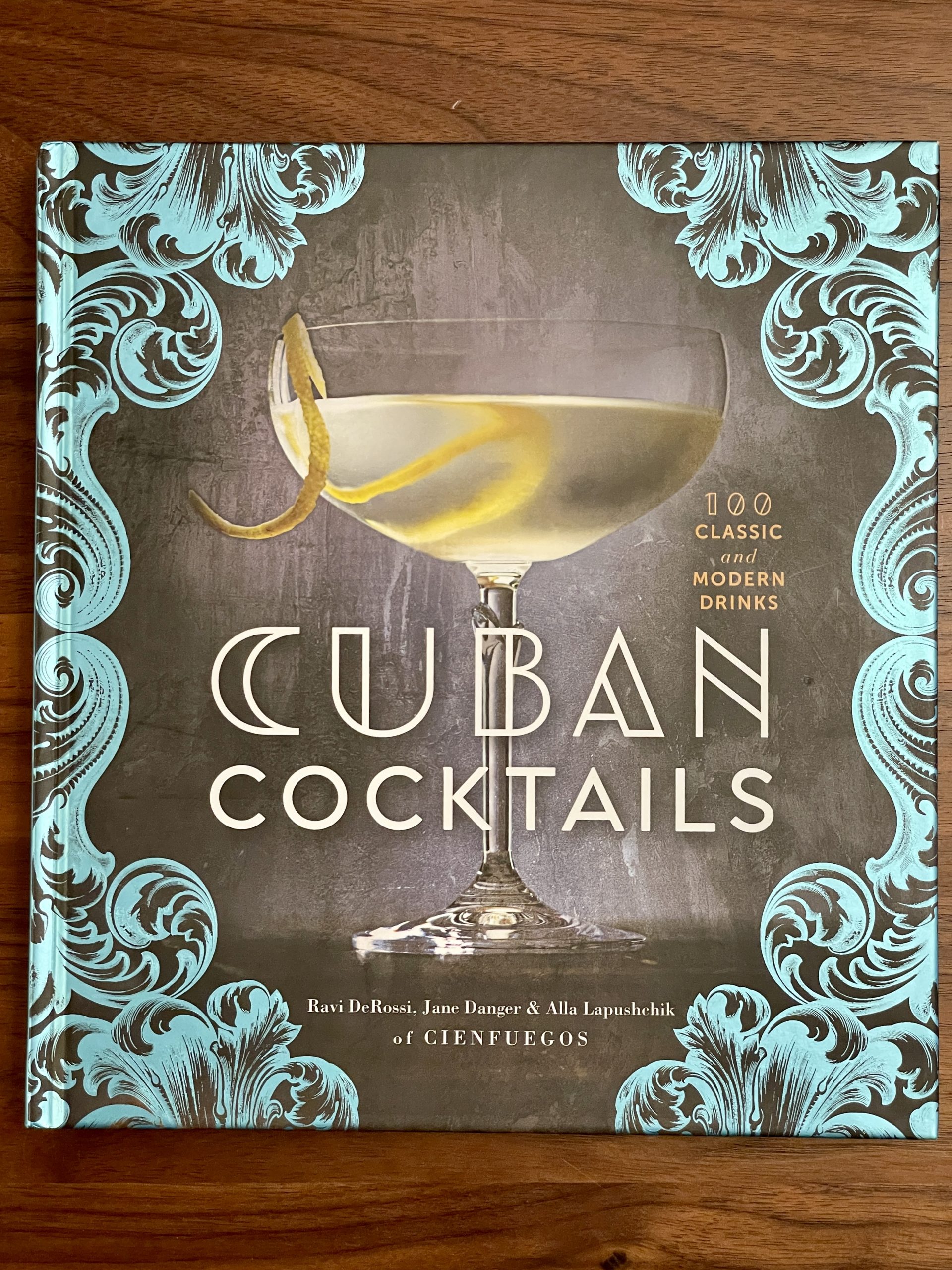
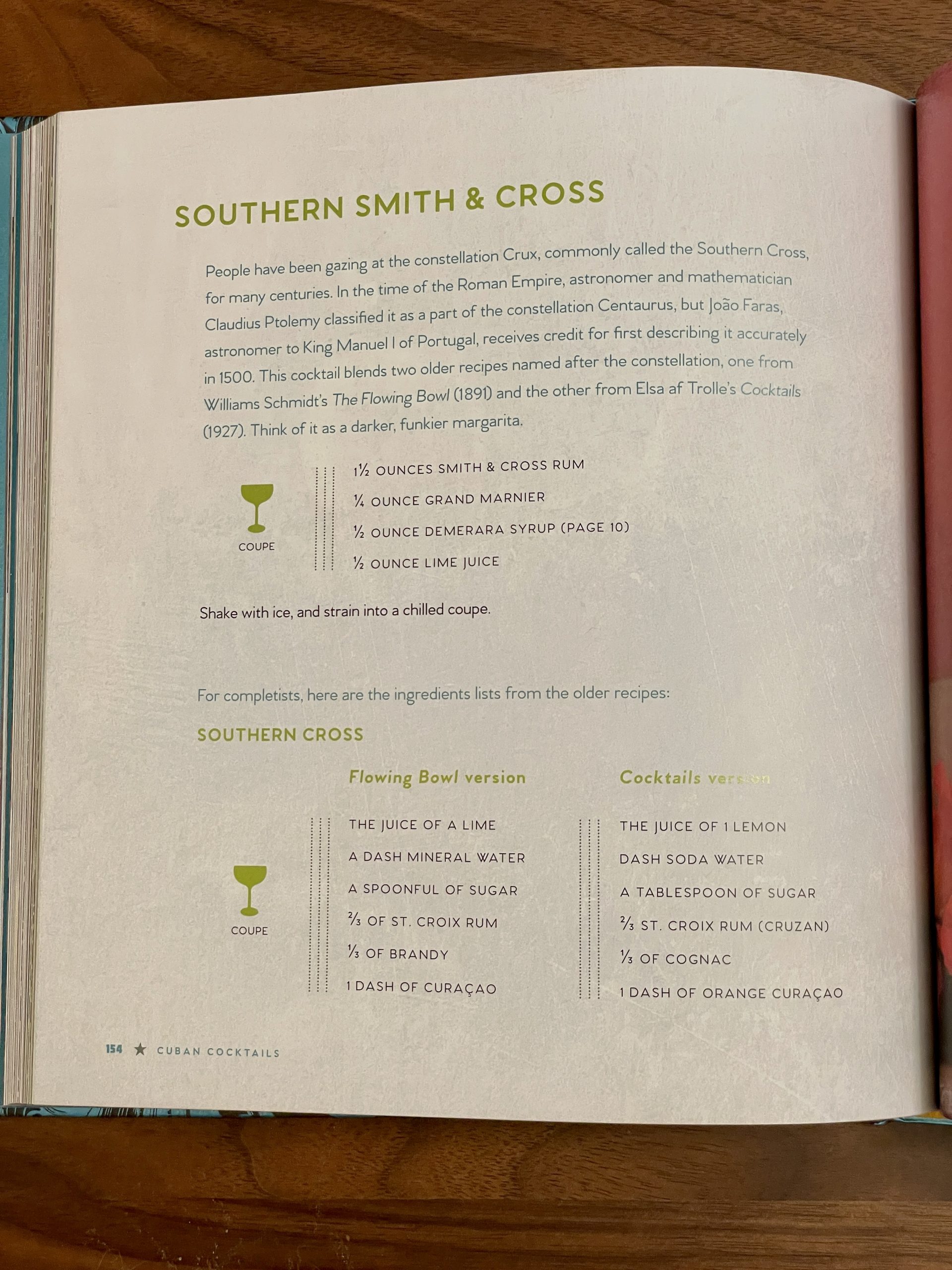
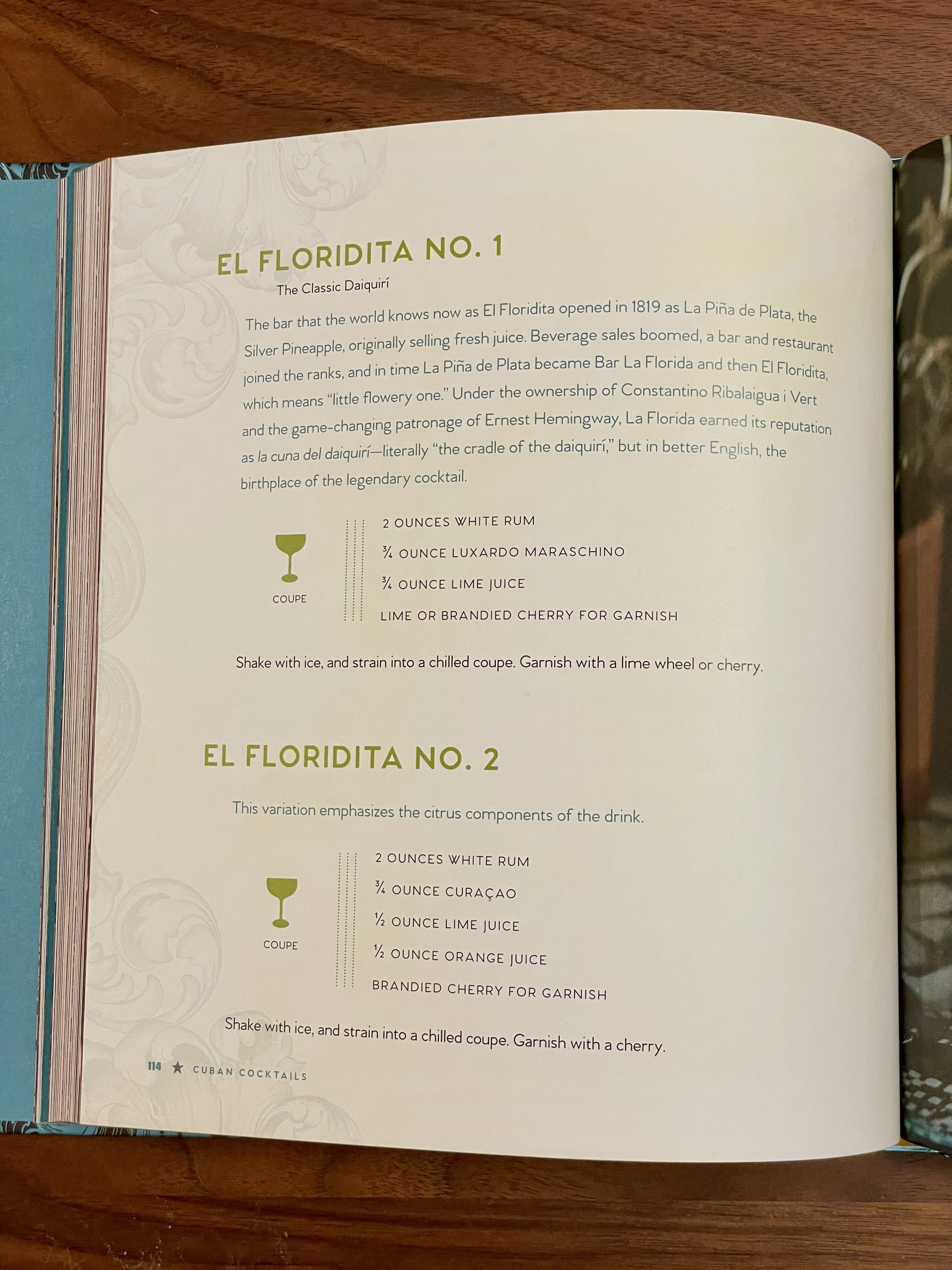
I ordered Cuban Cocktails and while there are some nice things about it, there are some significant flaws. This 2016 book comes from the team behind the Death & Co. and the NYC Cuban bar Cienfuegos that closed a couple years ago. The book starts with a history of Cuba and cocktails from the country, including rum that is the key ingredient. Written in 2015 when the Obama administration eased travel restrictions, the book is a sad reminder of the subsequent travel restrictions that remain in place to do this day.
The book takes a chronological approach to the presentation of the recipes, starting the early punch recipes and then moving forward in time to daiquiris, tiki, and present day. While a number of historical recipes are included, there are also modern approaches to these style of cocktails.
The problem is that while many recipes name-check specific brands, none of those named brands are Cuban rum. Nor are there any suggestions for what kind of rums a US consumer should procure for these recipes. After pages of specific references to Appleton, Smith & Cross, Flor de Cana, and El Dorado the Daiquiri chapter only references “white rum” or “light rum.” This seems to be very curious omission, since Cuban rums aren’t available in the United States. And I doubt these craft cocktail bartenders are using the standard bearer for white rum, Bacardi Superior. The whole point of learning from professional bartenders is to learn what kind of ingredients they use so that the home bartender can elevate their game. There isn’t really any coverage of Cuban brands either, apart from photos that show the Havana Club logo on glassware and bottles.
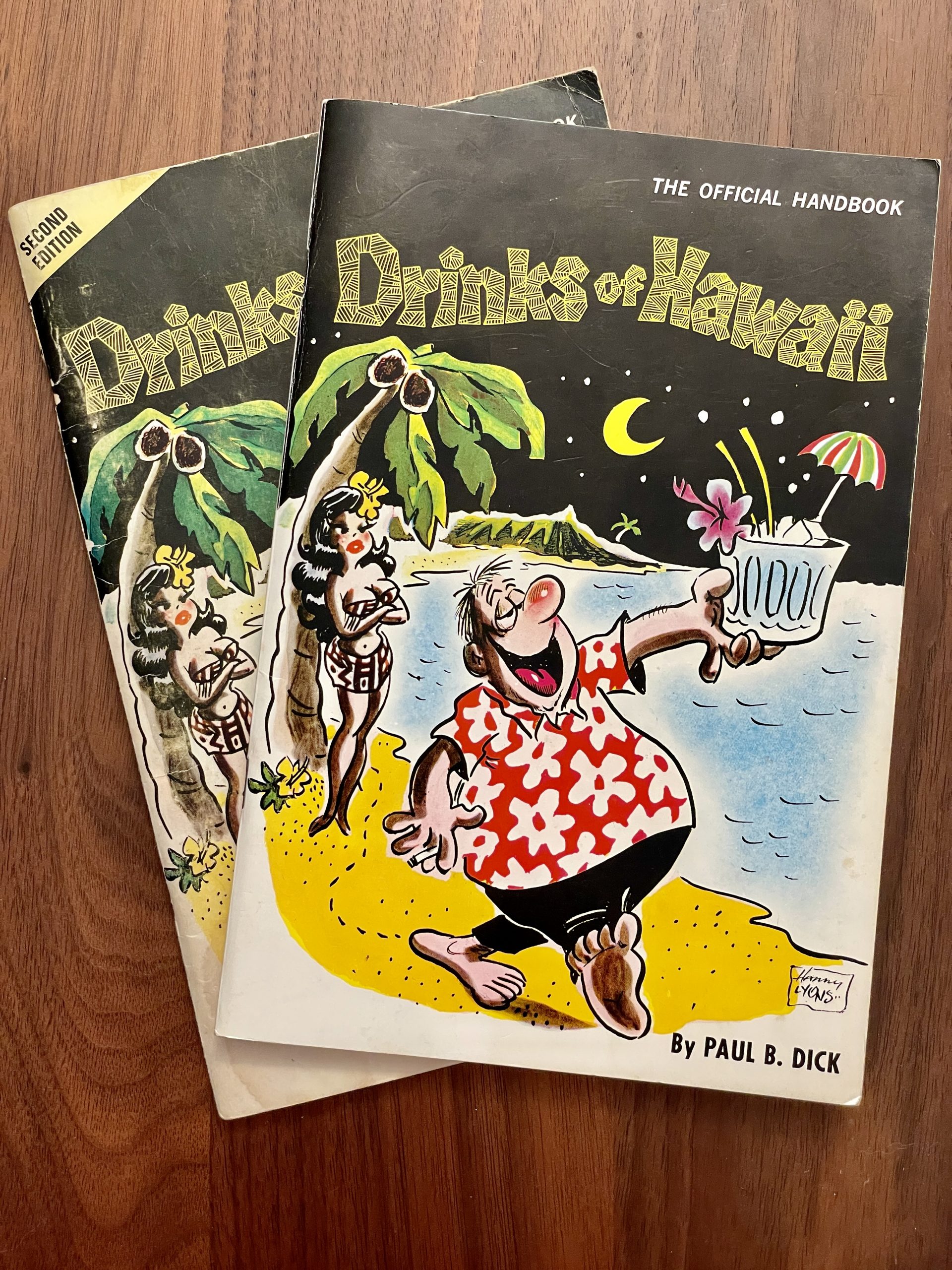
Why two copies? For very important reasons we’ll get to.
I’ve been doing some research on the evolution of the Hawaiian Mai Tai. Contrary to popular belief, the Mai Tai did not land on the shores of O’ahu and have pineapple juice added immediately. In fact, it took into the 1960s before pineapple juice was commonly seen in published recipes. But the Mai Tai that became the “top tourist tantalizer” (as described in Honolulu newspapers) was not quite the 1944 recipe either. It more clearly resembled the recipe we covered on UltimateMaiTai.com as the 1956 Mai Tai, made with light rum as well as Jamaican rum.
When did the pineapple juice get added? We started to see this in published recipes starting in the early 1960s. The Royal Hawaiian Hotel, where the Trader Vic introduced the Mai Tai to Hawai’i, seemed to not switch over to this style until quite late – the early 1970s.
We thank Jeff “Beachbum” Berry for the reference, the recipe book Drinks of Hawaii by Paul B. Dick, originally published in 1971. Except that the 1971 edition features two Mai Tai recipes and neither is from the Royal Hawaiian.
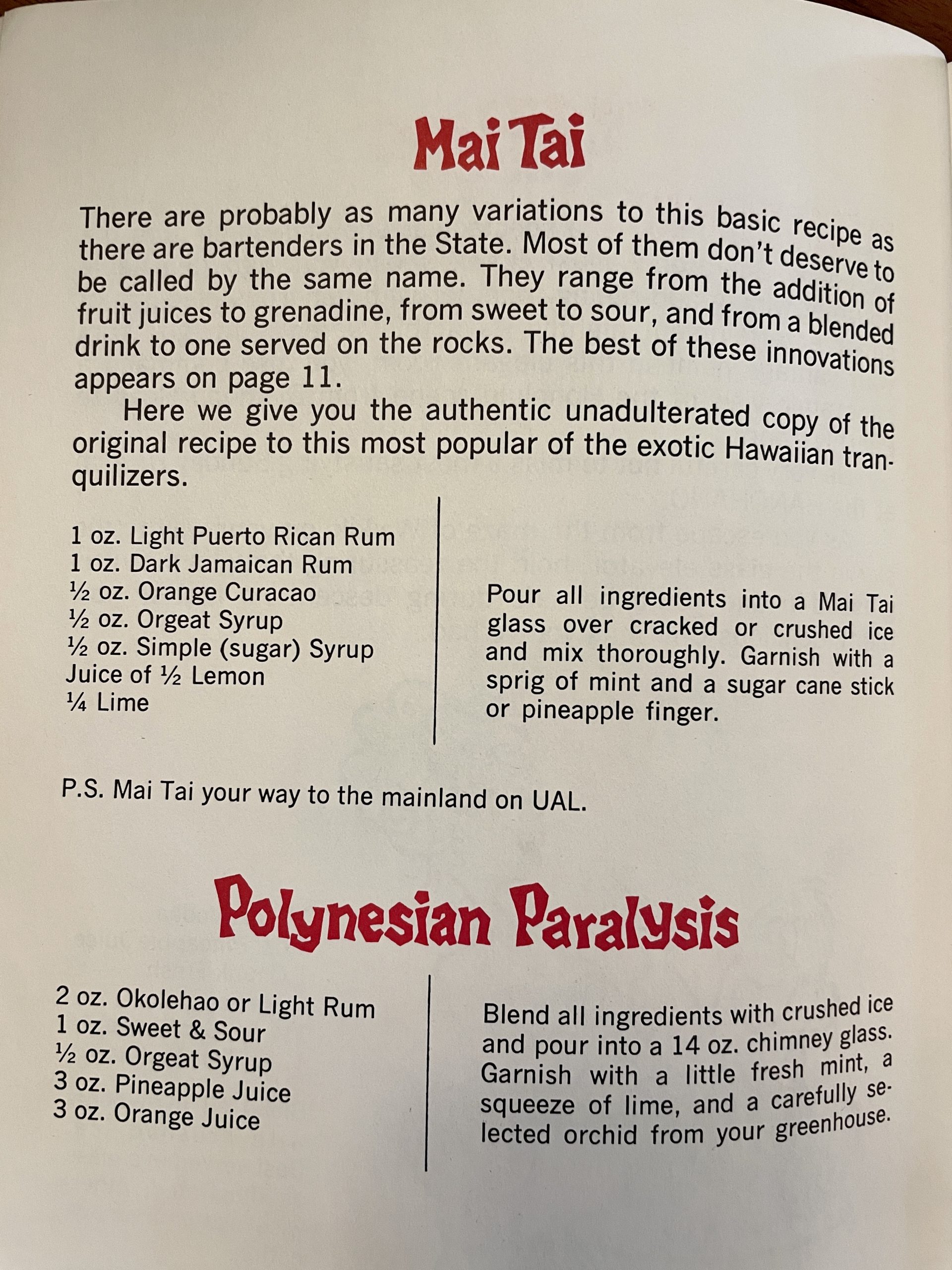
The first Mai Tai is the “authentic unadulterated copy of the original recipe” which is: 1 oz Light Puerto Rican Rum 1 oz Dark Jamaican Rum ½ oz Orange Curacao ½ oz Orgeat ½ oz Simple Syrup Juice of ½ Lemon and ¼ Lime
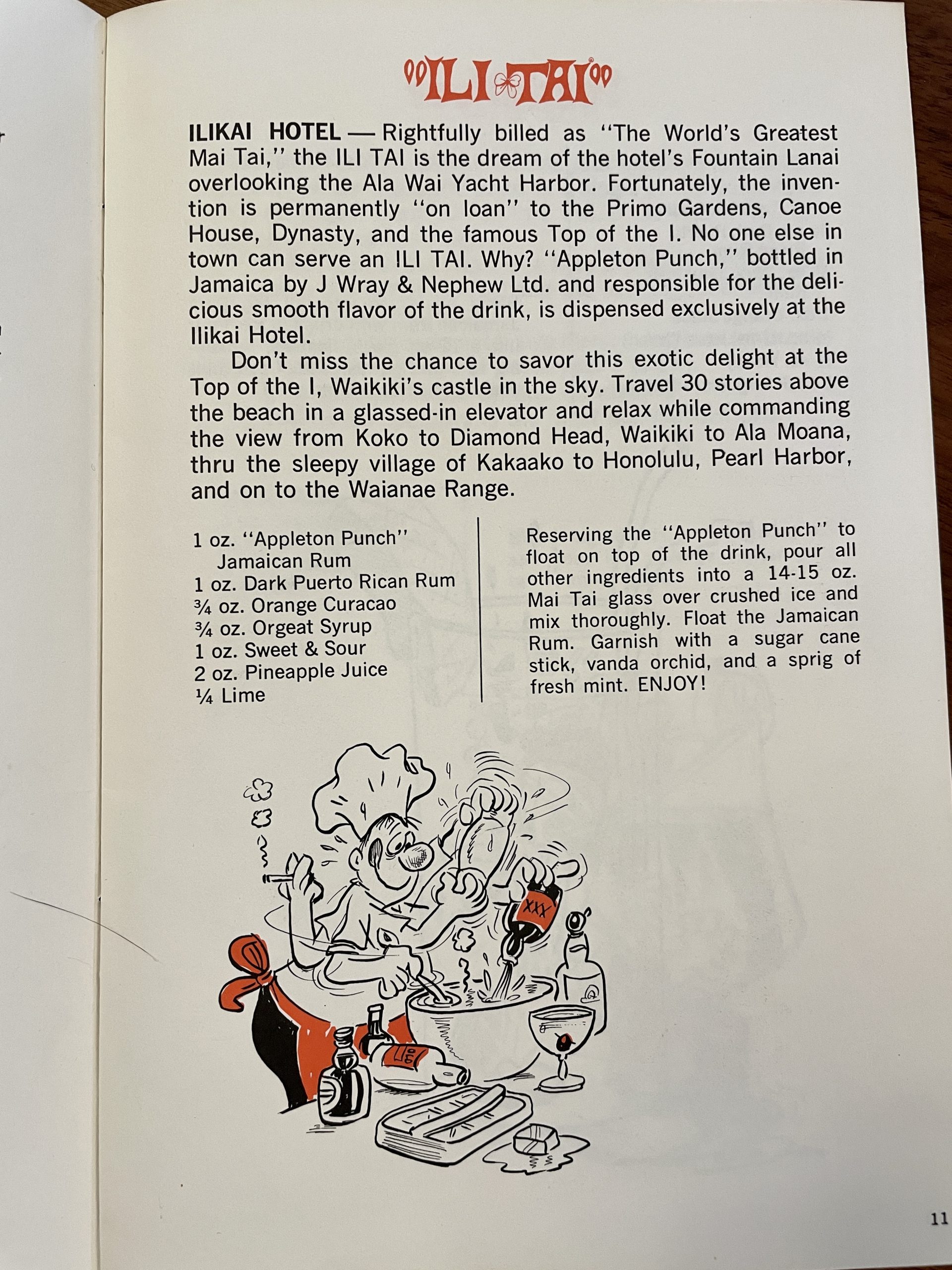
The second recipe in the 1971 edition comes from the iconic Ilikai Hotel: The Ili Tai 1 oz “Appleton Punch” Jamaican Rum 1 oz Dark Puerto Rican Rum ¾ oz Orange Curacao ¾ oz Orgeat 1 oz Sweet & Sour 2 oz Pineapple Juice ¼ Lime
Appleton Punch rum was the successor to the Dagger line and was a dark Jamaican rum at 43% ABV.
Second Edition is the Holy Grail of the Modern Royal Hawaiian Mai Tai Recipe
The elusive Royal Hawaiian Mai Tai didn’t appear in the first edition of the recipe book Drinks of Hawaii, so we sought out the 2nd edition published a year later in 1972.
As with the first edition, there are two Mai Tai recipes starting with the “authentic unadulterated copy of the original recipe” shown above.
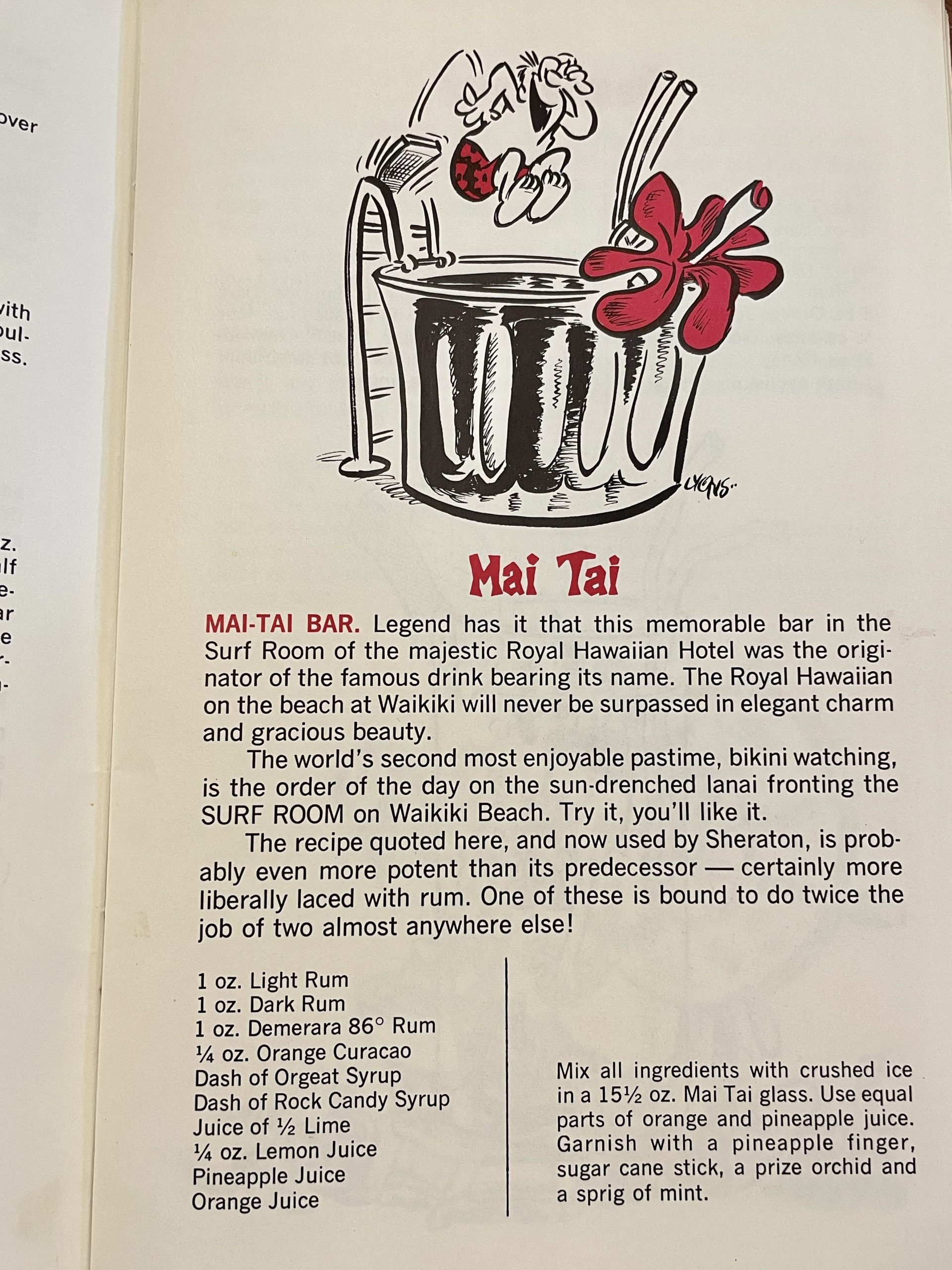
The second recipe in the 1972 edition features the Mai Tai at the Surf Room at the Royal Hawaiian Hotel. This is the recipe that Beachbum Berry included in several of his books and the Total Tiki App and the first documented use of pineapple juice in the Mai Tai at the Royal Hawaiian that I could find.
Royal Hawaiian Mai Tai (1972) 1 oz Light Rum 1 oz Dark Rum 1 oz Demerara 86 Rum ¼ oz Orange Curacao Dash* Orgeat Dash* Rock Candy Juice of ½ Lime ¼ oz Lemon Juice Equal Parts Pineapple Juice and Orange Juice
* Dash in this context is equivalent to ¼ oz.
How much Pineapple Juice and Orange Juice? It doesn’t say (Beachbum Berry suggested 1 oz each). This is a very different Mai Tai with darker and more flavorful rums, to balance all the added juices. This style of Mai Tai isn’t my favorite, but they’re certainly popular on the islands.
Drinks of Hawaii is an interesting book. There are some classic Don the Beachcomber recipes including the Pearl Diver and Navy Grog, but also 70s favorites like the Harvey Wallbanger and Margarita. Era-specific cartoons are by Honolulu political cartoonist Harry Lyons.
Look for my article on the evolution of the Hawaiian Mai Tai in the next issue of Exotica Moderne (and contemporaneously at UltimateMaiTai.com) in May.
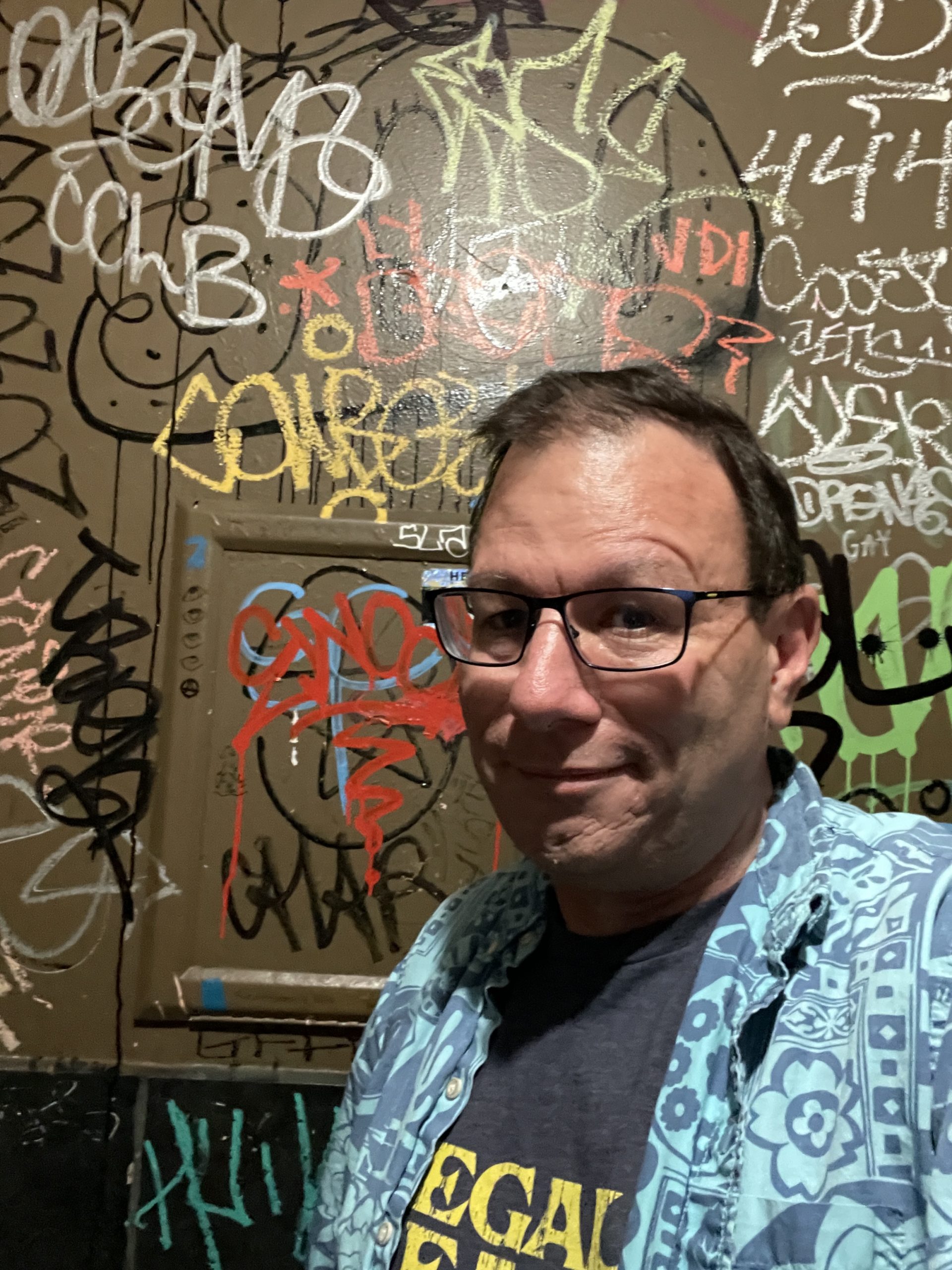
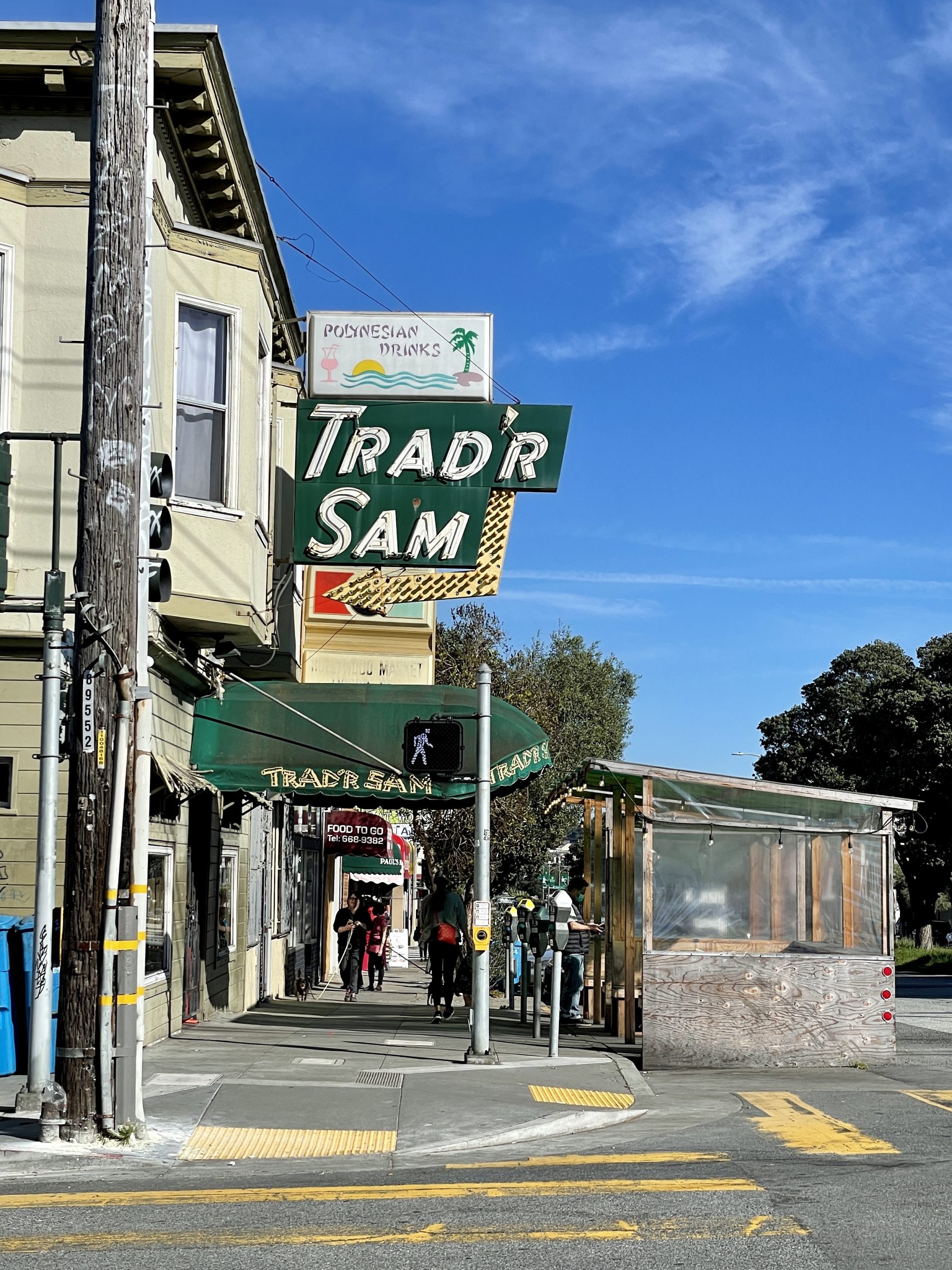
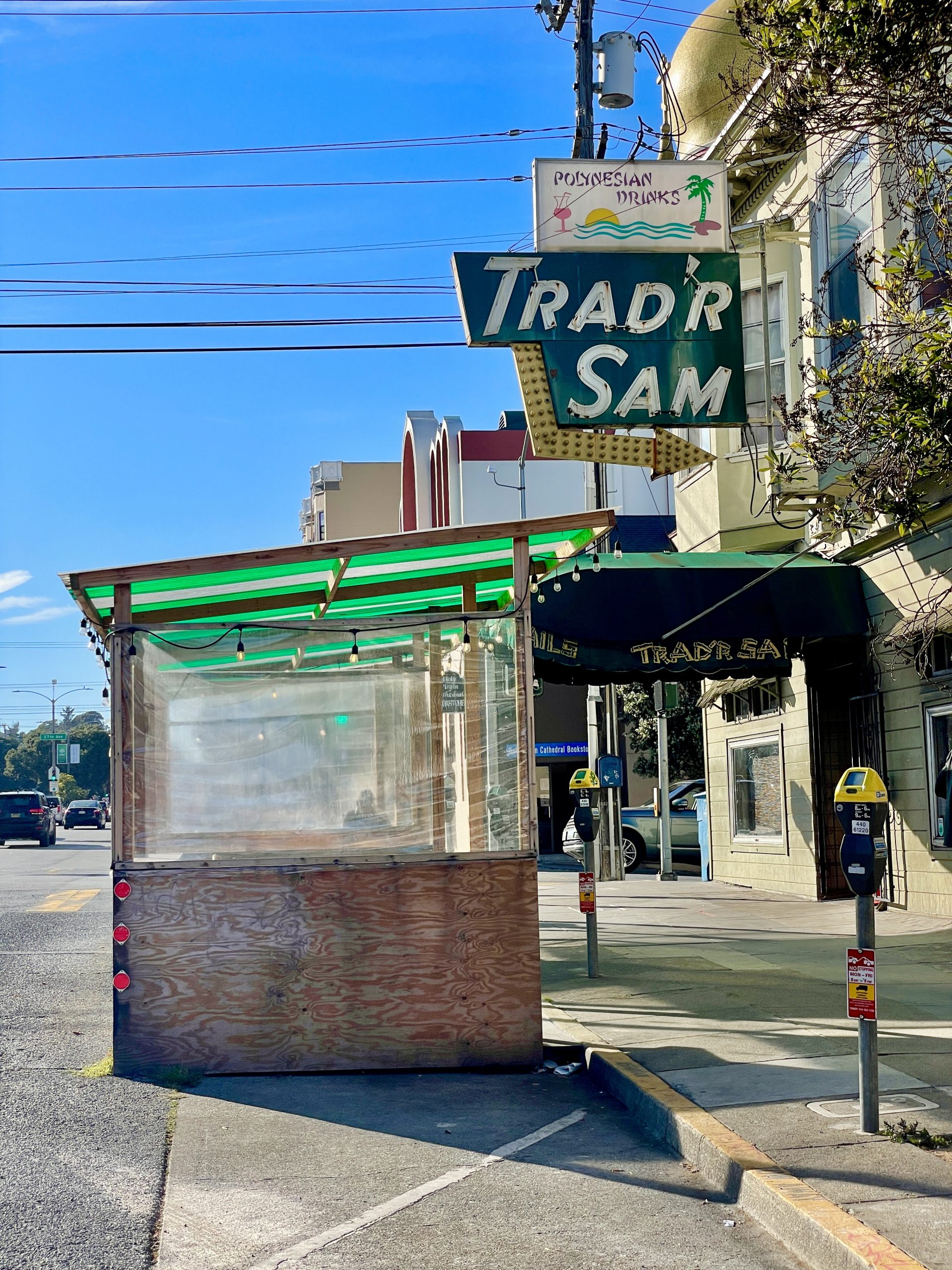
This is Trad’r Sam in San Francisco, the longest continually operating tiki bar in the world. Though, despite being open since 1937, the graffiti in the bathroom I’m sure only dates back a couple decades.
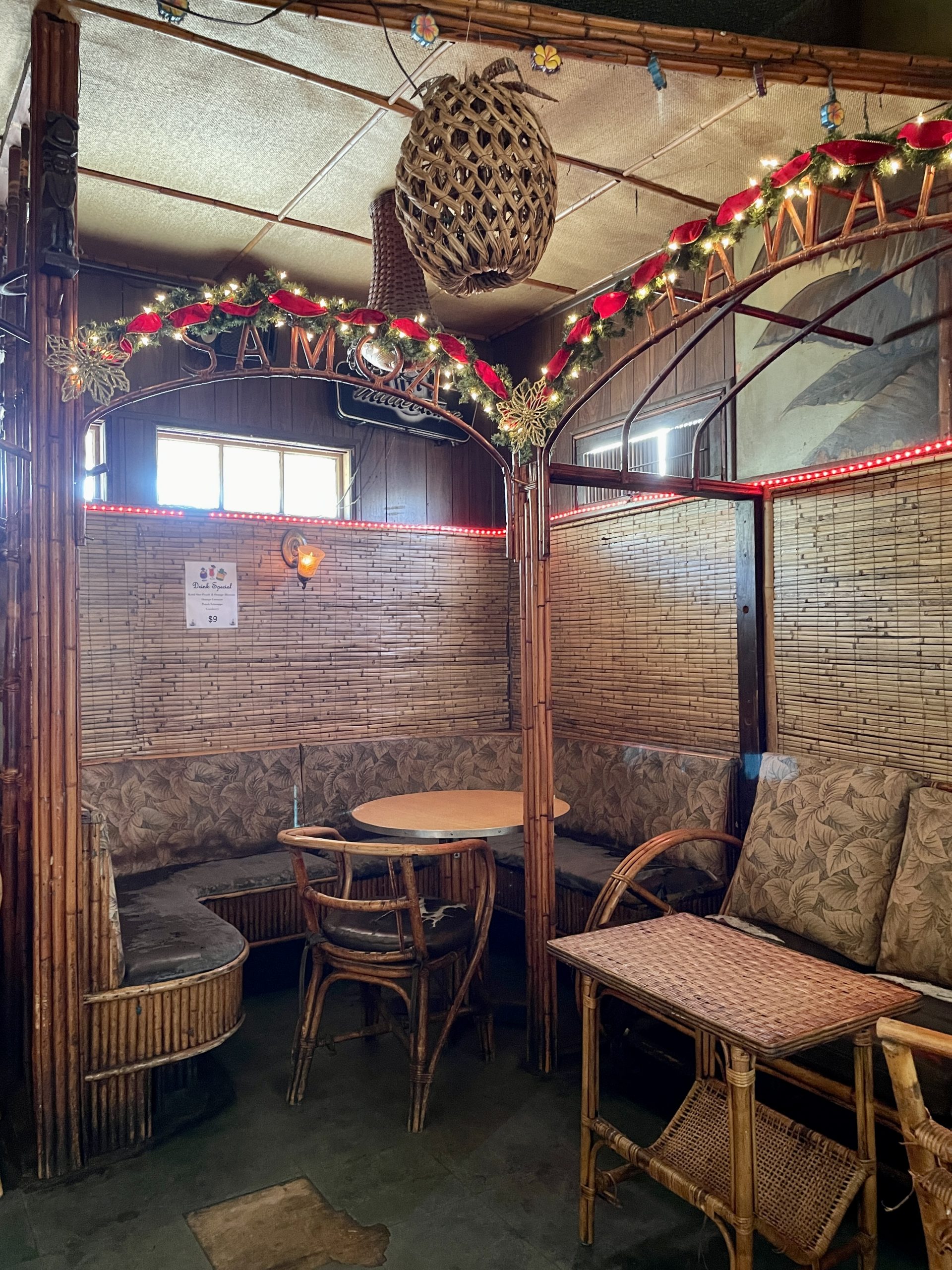
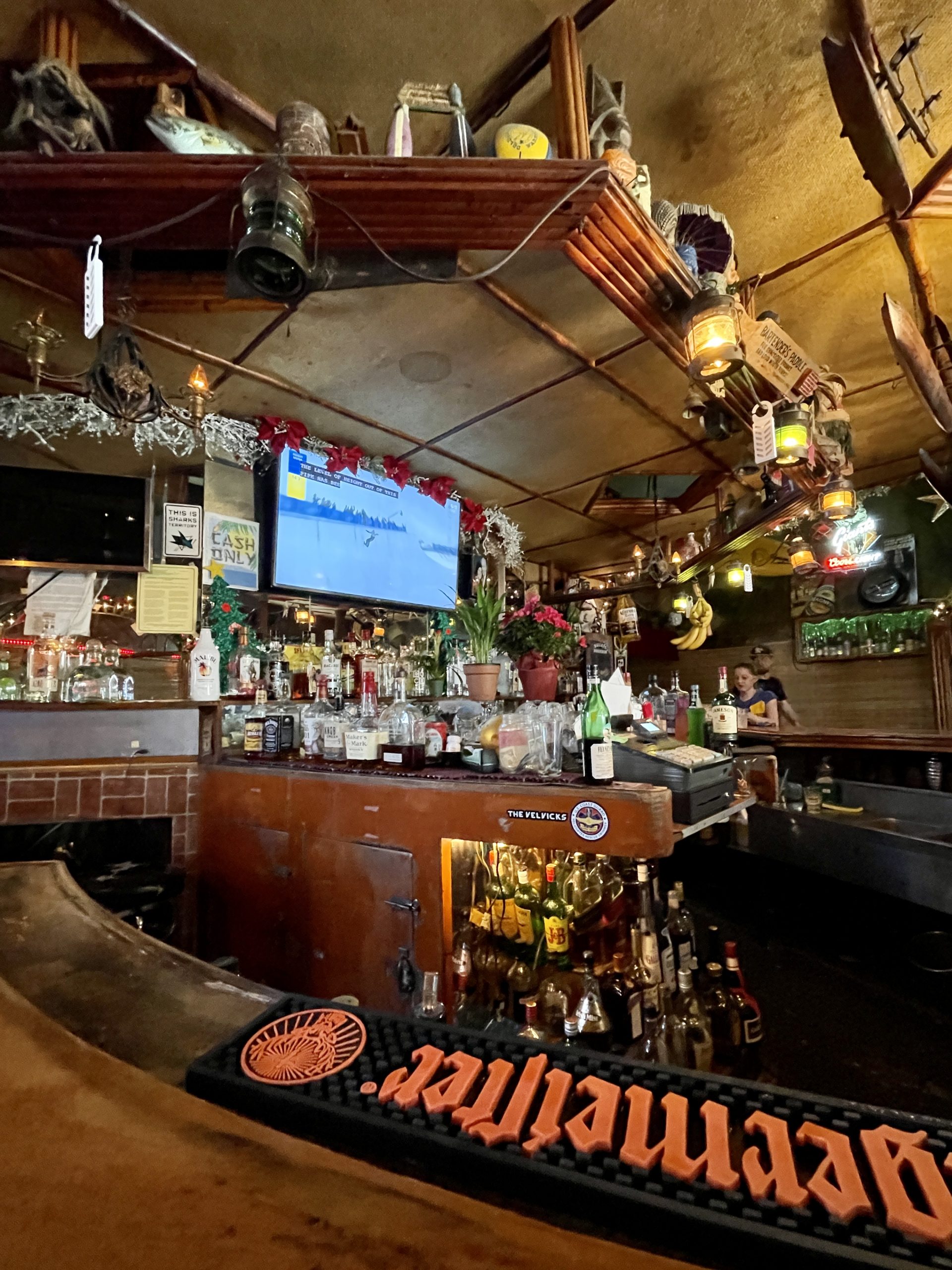
My company gave me a “wellness” day so I took a trip to San Francisco to visit Trad’r Sam, the longest continually operating tiki bar in the world. Like many bars outside the city’s financial and tourist core, this is a dive bar not a craft cocktail place. Inside things are … very divey. There are some longtime bamboo framing elements around the tables, and a few tiki mugs hanging above the bar, and a lot of tired bones. Inside, the place is cash only, and they have a long menu of cocktails along with a modest collection of spirits and beer.
The owner of Trad’r Sam took offense to my review a couple years ago when I said that all the drinks were pretty much the same. Part of my revisit was to test the theory.
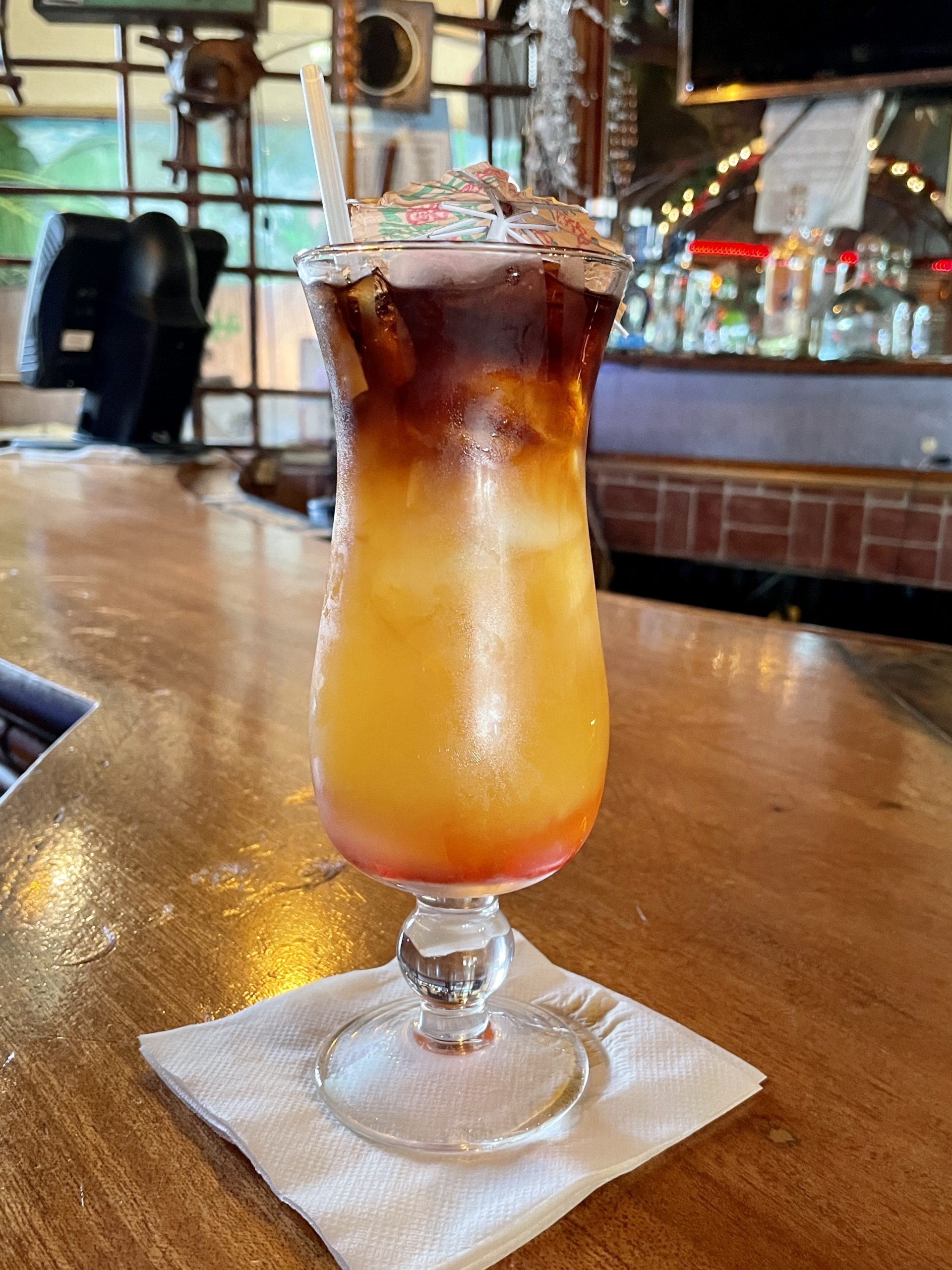
My $9 island Mai Tai was prepared thusly: Splash of bottled Lime and Sweet & Sour mix Splash of Triple Sec and Amaretto Splash of Grenadine Steady pours of Myers’s white rum and a dark rum (might have been Cruzan) Big splash of Pineapple Juice Healthy float of Myers’s dark rum
If the grenadine was removed I would give this a passing grade, as my first few sips came off the bottom where the grenadine had settled and it was not good. Once I stirred it up a bit more the cocktail improved. Service was efficient and friendly enough for a dive bar.
I was thinking about a second cocktail when another patron ordered a Zombie. The Zombie had even more pineapple juice and more rum, but otherwise seemed like the same ingredients. Served blended.
So, it was one and done for me. I’m glad I took the drive out on a sunny Friday. The parklet outside was spartanly appointed but definitely was being well used by regulars who were starting the weekend early.